Slurry pumps are built to move abrasive, high-density mixtures of liquid and solids across mining, dredging, power generation, and industrial processing operations. Because no single pump design performs well across every application, manufacturers offer multiple series, each engineered for specific flow conditions, particle sizes, and installation requirements. Choosing the wrong series can lead to premature wear, frequent downtime, and higher maintenance costs, while selecting the right one improves efficiency and extends equipment life. This article walks through the major slurry pump series available on the market and explains how to match each one to the right application.
Understanding the Key Factors Before Selecting a Slurry Pump
Before comparing pump series, it helps to identify the operating conditions that will determine which design fits best. Slurry pump selection generally depends on the concentration and abrasiveness of the solids being pumped, the required flow rate and head, the installation environment, and the space available for the pump and its foundation.
- Particle size and hardness: coarse or highly abrasive solids require thicker wear parts and slower impeller speeds.
- Slurry concentration: higher solid content increases wear rates and often calls for heavier-duty casings.
- Chemical exposure: corrosive slurries, such as those found in desulfurization systems, require compatible metallurgy or rubber lining.
- Installation type: surface-mounted, submersible, or vertical sump installations each favor different pump configurations.
- Required flow and head: the pump curve must match the system's demand without operating too far from its best efficiency point.
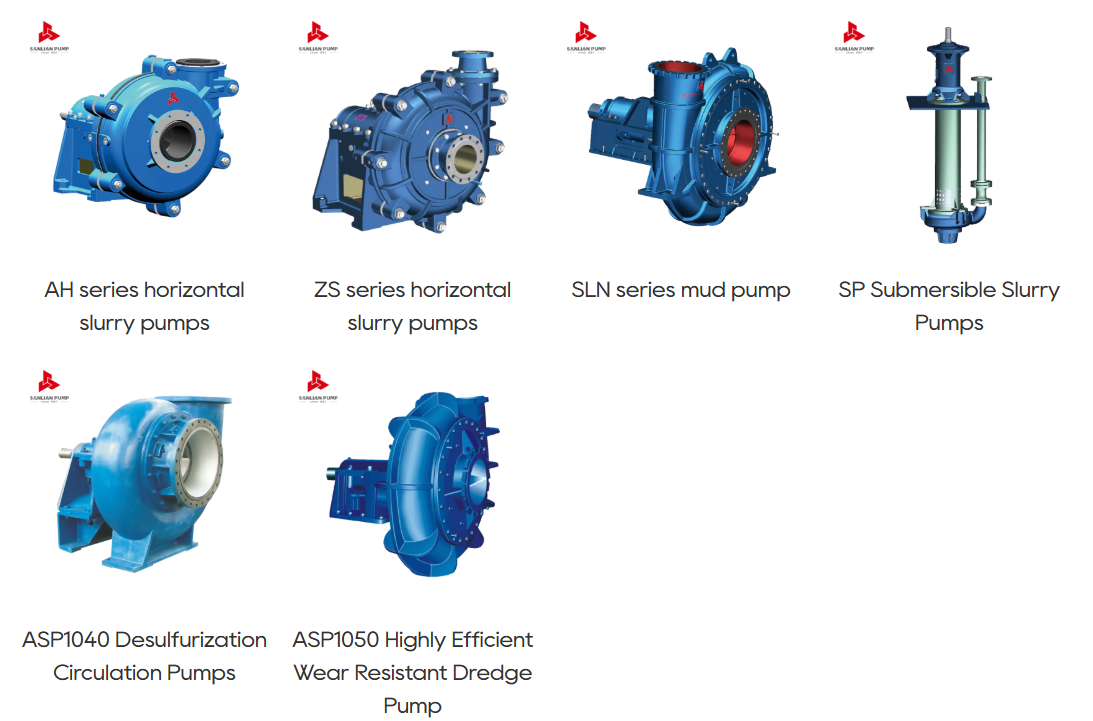
AH Series Horizontal Slurry Pumps: The General-Purpose Workhorse
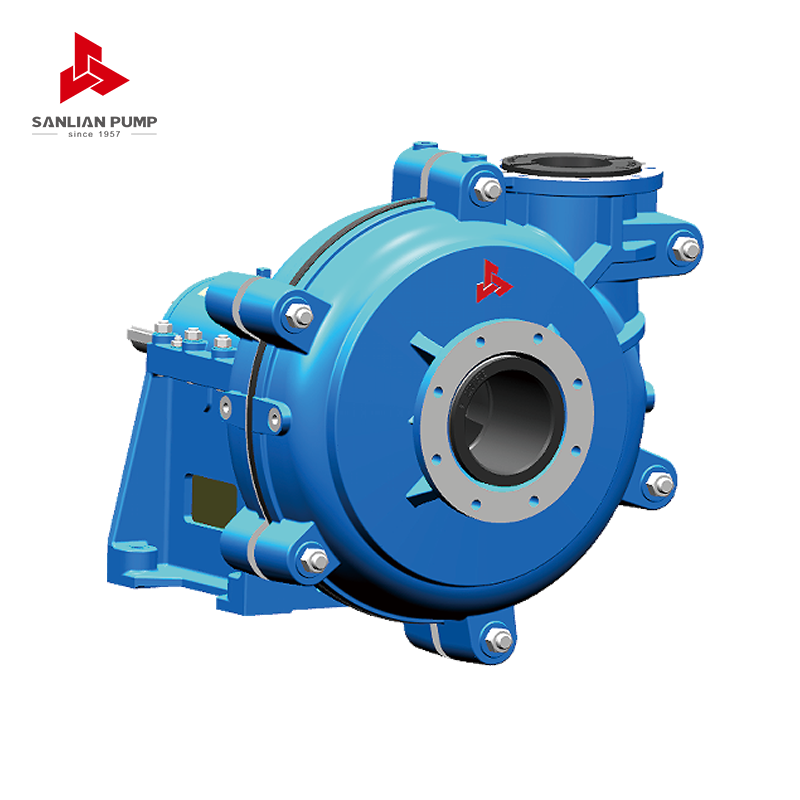
The AH series horizontal slurry pump is one of the most widely used designs in mining and mineral processing because of its heavy-duty construction and versatility. Built with a single-stage, single-suction horizontal configuration, the AH series handles high-density slurries with coarse particles and is commonly found in applications such as tailings transport, mineral concentrate handling, and general mine dewatering. Its replaceable wear liners and thick-walled casing allow it to withstand continuous abrasive wear, making it a practical choice when durability and long service intervals matter more than compact size.
ZS Series Horizontal Slurry Pumps: Balanced Performance for Medium-Duty Use
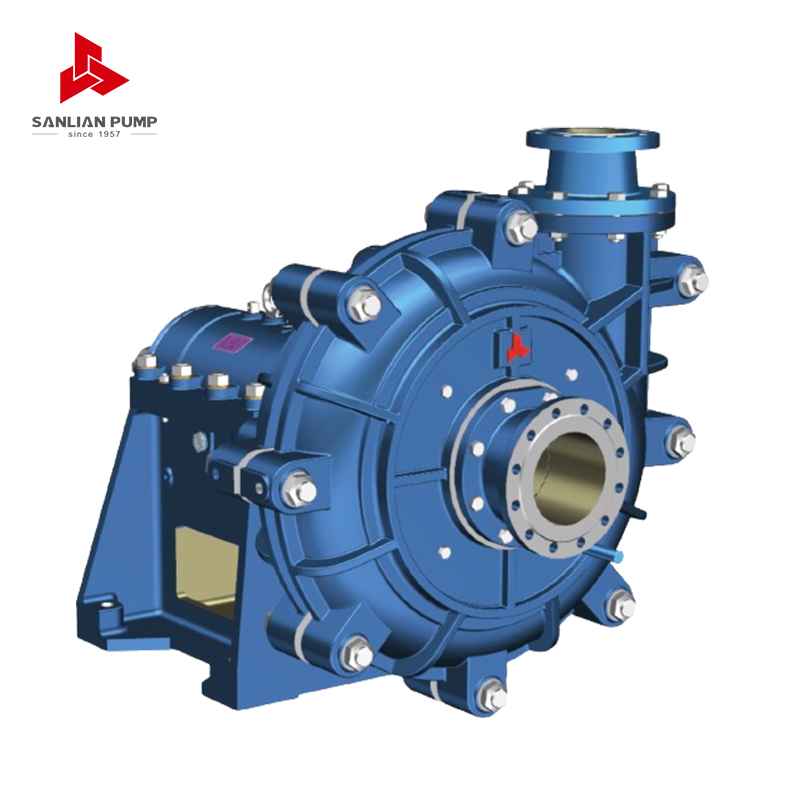
The ZS series horizontal slurry pump offers a similar horizontal configuration to the AH series but is typically optimized for medium abrasion and moderate flow applications. It suits processing plants that need reliable performance without the heaviest-duty casing thickness required for the harshest mining conditions. Facilities handling coal preparation, sand and gravel processing, or general industrial slurry transfer often find the ZS series delivers a good balance between cost, efficiency, and wear resistance, particularly where solids are moderately abrasive rather than extremely coarse.
SLN Series Mud Pumps: Built for High-Density, Viscous Slurries
The SLN series mud pump is designed specifically for pumping thick, high-density mud and heavy sludge that would overwhelm a standard slurry pump. This series is commonly used in dredging operations, mud handling in drilling applications, and thickened tailings transport. Its design typically features a larger flow passage and a robust impeller capable of pushing viscous, high-solid-content material without clogging, making it the preferred choice when the slurry behaves more like mud than a free-flowing liquid mixture.
SP Submersible Slurry Pumps: Ideal for Sump and Pit Applications
SP submersible slurry pumps are installed directly in the slurry, eliminating the need for suction piping and reducing the risk of cavitation. This vertical, submerged configuration works well in sump pits, tailings ponds, and excavation dewatering where space constraints or fluctuating liquid levels make a horizontal surface-mounted pump impractical. Because the motor and pump are combined into a single submersible unit, these pumps also simplify installation in confined or hard-to-access areas, though they typically require more careful maintenance planning since servicing involves pulling the unit from the sump.
ASP1040 Desulfurization Circulation Pumps: Engineered for Corrosive Environments
Flue gas desulfurization (FGD) systems in power plants circulate limestone slurry that is both abrasive and chemically corrosive. The ASP1040 desulfurization circulation pump is purpose-built for this environment, often featuring corrosion-resistant materials or specialized rubber and metal linings that resist the combined effects of abrasion and chemical attack. Selecting this series over a general-purpose slurry pump is important in FGD applications, since standard wear materials can degrade quickly when exposed to the acidic byproducts generated during the desulfurization process.
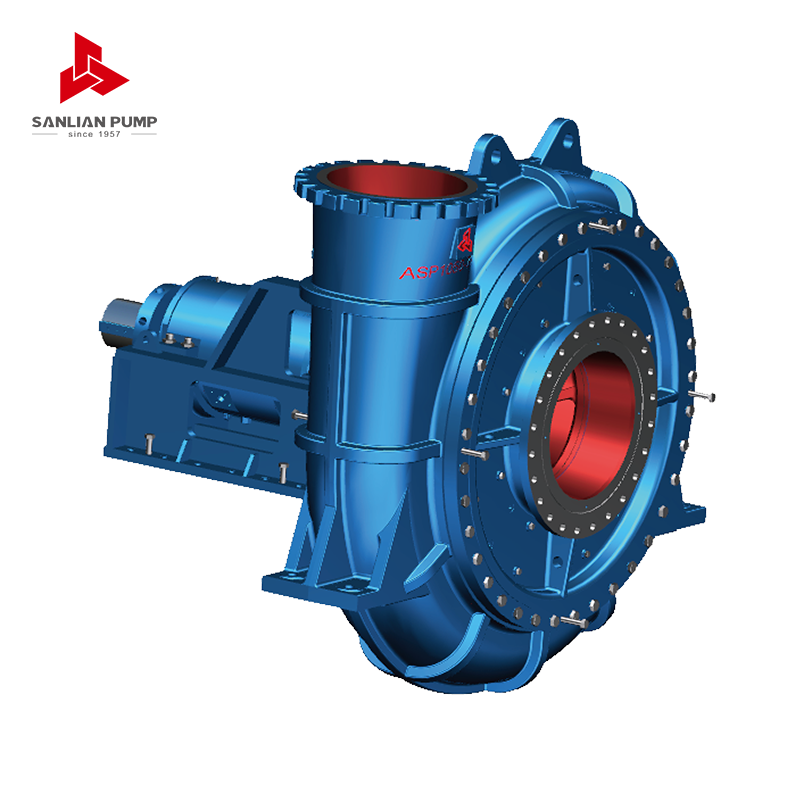
ASP1050 Highly Efficient Wear Resistant Dredge Pump: Designed for High-Volume Dredging
The ASP1050 dredge pump is engineered for large-scale dredging projects that require moving high volumes of sand, gravel, and sediment over long distances. Its wear-resistant construction addresses the extreme abrasion caused by continuous exposure to coarse, high-density material, while its efficiency-focused hydraulic design helps reduce energy consumption during extended operation. This series is well suited to river dredging, land reclamation, and port maintenance projects where reliability over long, continuous run times is a priority.
Comparing Slurry Pump Series at a Glance
The table below summarizes the primary application focus of each series to help narrow down the right choice based on operating conditions.
| Series |
Configuration |
Best Suited For |
| AH Series |
Horizontal, heavy-duty |
Mining, tailings, high-abrasion slurries |
| ZS Series |
Horizontal, medium-duty |
General industrial and moderate abrasion slurries |
| SLN Series |
Horizontal, high-flow passage |
Thick mud, dredging, high-density sludge |
| SP Series |
Vertical, submersible |
Sumps, pits, dewatering, confined spaces |
| ASP1040 |
Horizontal, corrosion-resistant |
Desulfurization circulation, corrosive slurries |
| ASP1050 |
Horizontal, wear-resistant |
Large-scale dredging, land reclamation |
Steps to Narrow Down the Right Pump Series
Selecting the correct slurry pump series is easier when approached as a step-by-step process rather than a single decision. The following steps can help guide the evaluation.
- Identify the slurry's physical properties, including particle size, concentration, and viscosity, to rule out unsuitable designs early.
- Determine whether the installation requires a surface-mounted horizontal pump or a submersible unit based on available space and access.
- Check for chemical exposure that may require corrosion-resistant materials, as seen in desulfurization or acidic mining environments.
- Match the pump's flow and head performance to the system's actual operating point, avoiding oversized or undersized selections.
- Consider maintenance access and expected wear part replacement frequency, especially for continuous, high-volume operations like dredging.
Common Selection Mistakes to Avoid
Even experienced operators sometimes select a slurry pump series based on cost or familiarity rather than actual process requirements. Choosing a general-purpose horizontal pump for a highly corrosive application, for instance, can lead to rapid liner failure and unplanned shutdowns. Similarly, installing a standard horizontal pump in a fluctuating sump level environment instead of a submersible unit can cause cavitation and inconsistent flow. Taking the time to match the pump series to the specific combination of solids, chemistry, and installation conditions helps avoid these costly missteps and results in more predictable, longer-lasting performance.
Final Thoughts
Slurry pump series such as AH, ZS, SLN, SP, ASP1040, and ASP1050 each address distinct operating challenges, from heavy abrasion in mining to corrosive circulation in desulfurization systems and high-volume dredging. By carefully assessing slurry properties, installation constraints, and chemical exposure before making a selection, operators can choose a pump series that delivers reliable performance while minimizing wear-related downtime and maintenance costs.


 English
 中文简体
中文简体 Français
 Español
 Português
 عربى
عربى

 皖公网安备34052302341647号