Introduction to Iron-Rich Wastewater Pumping Challenges
Industrial wastewater systems often face the complex challenge of handling fluids containing abrasive solids, especially iron oxide particles generated from mining, steel processing, and metal treatment industries. When these particles accumulate in a vortex tank, they form a dense slurry that is difficult to transport using conventional pumping systems.
The LSC Vertical Long Axis Pump is specifically designed to address this issue. It provides a reliable solution for extracting wastewater mixed with heavy solids from vortex tanks, ensuring continuous operation without clogging or excessive wear.
Unlike traditional horizontal pumps, this vertical configuration allows the impeller to operate deep within the tank, directly interacting with sediment-rich zones where iron oxide and solids settle.
What Is an LSC Vertical Long Axis Pump?
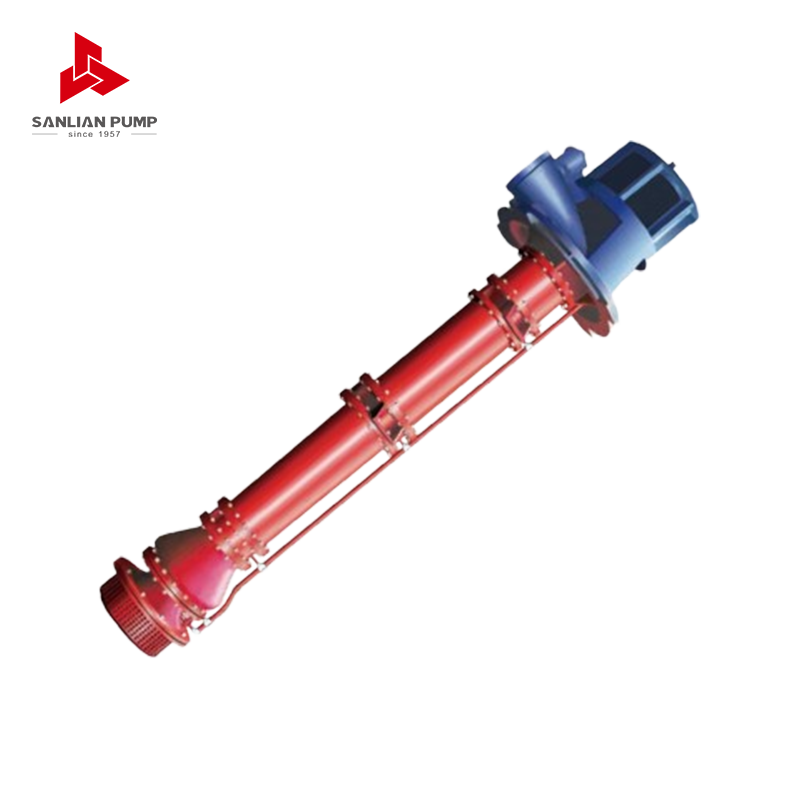
The LSC Vertical Long Axis Pump is a specialized industrial pump designed for submerged operation in tanks, pits, or basins. It uses a long vertical shaft to connect the motor, located above the liquid level, to the impeller positioned deep inside the fluid.
This structure allows the pump to operate efficiently in environments where solids concentration is high and where sedimentation occurs, such as vortex tanks used in wastewater treatment systems.
Its design minimizes clogging risks while maintaining stable hydraulic performance even under abrasive conditions.
Working Principle in Vortex Tank Applications
In a vortex tank, wastewater is circulated in a swirling motion to separate solids from liquids. Heavy particles like iron oxide settle toward the bottom center, forming a concentrated sludge zone.
The LSC Vertical Long Axis Pump is installed at or near this sediment collection zone. Its impeller draws in the dense slurry and lifts it upward through a vertical discharge column.
The long axis design ensures the motor remains dry and accessible, while only the hydraulic end is exposed to abrasive slurry conditions, increasing operational safety and lifespan.
Handling Iron Oxide and Solid-Laden Slurries
Iron oxide particles are highly abrasive and can significantly damage conventional pump systems. The LSC Vertical Long Axis Pump addresses this through specialized hydraulic and structural design features.
- Wear-resistant impeller materials such as high-chrome alloy or rubber lining
- Large passage impeller design to reduce clogging risks
- Optimized vortex flow intake to prevent sediment blockage
- Reinforced shaft structure for handling high torque loads
These features allow continuous operation even in environments with high solid concentration and variable particle sizes.
Key Structural Design Features
Vertical Long Shaft Configuration
The extended shaft connects the motor to the submerged impeller, enabling deep tank operation without exposing electrical components to corrosive fluids.
Hydraulic Efficiency Design
The impeller is designed for high efficiency in slurry transport, ensuring minimal energy loss while maintaining strong suction power for dense mixtures.
Bearing and Support System
Heavy-duty bearings stabilize the long shaft, reducing vibration and extending operational life in harsh conditions.
Industrial Applications
The LSC Vertical Long Axis Pump is widely used across industries where slurry handling is essential.
- Steel manufacturing wastewater treatment
- Mining tailings and slurry transport
- Chemical processing plants
- Municipal sludge and sediment removal systems
Performance Advantages
Compared to conventional pumps, the LSC Vertical Long Axis Pump offers several operational advantages in vortex tank systems.
It provides superior resistance to clogging due to its open impeller design and vortex-assisted suction. The vertical installation also reduces floor space requirements, making it ideal for compact treatment facilities.
Additionally, maintenance is simplified because the motor remains above the liquid level, allowing easier inspection and servicing.
Selection Criteria for Optimal Performance
Choosing the right pump configuration depends on multiple operational factors.
- Slurry density and iron oxide concentration
- Particle size distribution
- Required flow rate and head height
- Chemical corrosion levels in wastewater
Installation in Vortex Tank Systems
Proper installation ensures maximum efficiency. The pump should be positioned close to the sludge accumulation zone at the bottom center of the vortex tank.
Alignment of the vertical shaft is critical to prevent vibration and mechanical stress. Adequate clearance must also be maintained to allow unrestricted slurry inflow.
Maintenance and Troubleshooting
Regular maintenance ensures long-term performance in abrasive environments.
- Inspect impeller wear due to iron oxide abrasion
- Check shaft alignment and vibration levels
- Lubricate bearings according to manufacturer guidelines
- Monitor flow rate reduction as a clogging indicator
Comparison with Other Pump Types
The LSC Vertical Long Axis Pump differs significantly from submersible and horizontal slurry pumps in both structure and application suitability.
| Feature |
LSC Vertical Pump |
Submersible Pump |
Horizontal Slurry Pump |
| Clogging Resistance |
High |
Medium |
Medium |
| Maintenance Ease |
High |
Low |
Medium |
| Space Requirement |
Low |
Low |
High |
Case Study: Iron Oxide Slurry Treatment System
In a steel plant wastewater treatment facility, a vortex tank system equipped with LSC Vertical Long Axis Pumps successfully reduced downtime caused by clogging.
The system handled continuous discharge of iron oxide sludge with particle concentrations exceeding 30% solids content, maintaining stable operation over long cycles.
This resulted in improved efficiency, reduced maintenance costs, and higher overall system reliability.
Conclusion
The LSC Vertical Long Axis Pump provides a highly effective solution for managing challenging wastewater conditions in vortex tank systems, especially those containing iron oxide and solid particles.
Its robust design, efficient slurry handling capability, and ease of maintenance make it a preferred choice for industries requiring reliable and continuous wastewater transport under abrasive conditions.


 English
 中文简体
中文简体 Français
 Español
 Português
 عربى
عربى

 皖公网安备34052302341647号