A fire water sprinkler system is one of those building services that sits quietly for years and then has to perform perfectly during the worst ten minutes of a building's life. Most of the discussion around sprinklers focuses on the heads you can see on the ceiling. In our experience, the part that decides whether those heads actually deliver water is the pump room at the other end of the pipe.
What follows is a practical walkthrough: how these systems are put together, which type suits which building, and what deserves attention when the water supply and pumps are being selected.
What a Fire Water Sprinkler System Actually Does
A fire water sprinkler system is an active fire protection method. It combines a dedicated water supply, a network of pipes, and sprinkler heads that open individually when the heat above them reaches a set temperature (for ordinary-rated commercial heads, usually somewhere between 135°F and 170°F).
Only the heads sitting in the rising heat plume open. The rest stay closed, which is why fire statistics consistently show that the large majority of fires are controlled by one or two sprinkler heads before the fire service arrives. That single detail explains why sprinkler systems use so much less water than people expect.
Three conditions have to be satisfied at the same moment: enough pressure at the hydraulically most remote head, enough flow to supply the entire design area, and enough stored water to keep that flow going for the required duration. All three are settled long before anyone installs a sprinkler head. They are settled in the pump room.
The Four Main Types of Sprinkler Systems
NFPA 13 groups sprinkler systems into four broad families. The difference between them is not really the sprinkler head. It is how the piping holds water or air before a fire starts, and how quickly water reaches the fire once it does.
The four main sprinkler system types as defined by NFPA 13, compared by how they hold water and where they are typically installed.
| System type |
How it works |
Typical use |
Main watch-out |
| Wet pipe |
Pipes hold water under pressure at all times; a head opens and water discharges immediately |
Heated commercial, residential, and industrial buildings |
Cannot be used where piping may freeze |
| Dry pipe |
Pipes hold compressed air; the pressure drop when a head opens releases water into the piping |
Unheated warehouses, loading docks, parking structures, cold storage |
Water arrives with a delay, so pipe volume and air pressure matter |
| Pre-action |
Pipes stay dry until a detection system also trips, then the valve opens and water fills the piping |
Data centres, archives, museums, anywhere accidental discharge is costly |
Depends on detection and needs careful, disciplined maintenance |
| Deluge |
All heads are open; a detection signal opens a deluge valve and water floods the protected area at once |
High-hazard occupancies such as hangars, transformers, and flammable liquid storage |
By far the highest water demand of the four |
Choosing between them usually comes down to occupancy, freezing risk, and how much water damage an accidental discharge would cause. A heated warehouse and a refrigerated one may store identical goods and still need completely different systems.
The Pump Room Behind Every Sprinkler Head
It is easy to think of the sprinkler head as the system. In practice, the heads are the last few centimetres of a chain that begins at a water source and passes through a fire pump assembly. That assembly normally includes a main fire pump, a jockey pump, controllers, and a driver that is either electric or diesel. NFPA 20 governs how it is installed and how it must behave.
The jockey pump is the quiet one. It is small, it runs to make up minor leaks, and it holds system pressure so the main pump does not start every time a valve weeps. The main pump is the one sized for the real event. It starts on a pressure drop and has to deliver the design flow and pressure for the full required duration, without hesitation.
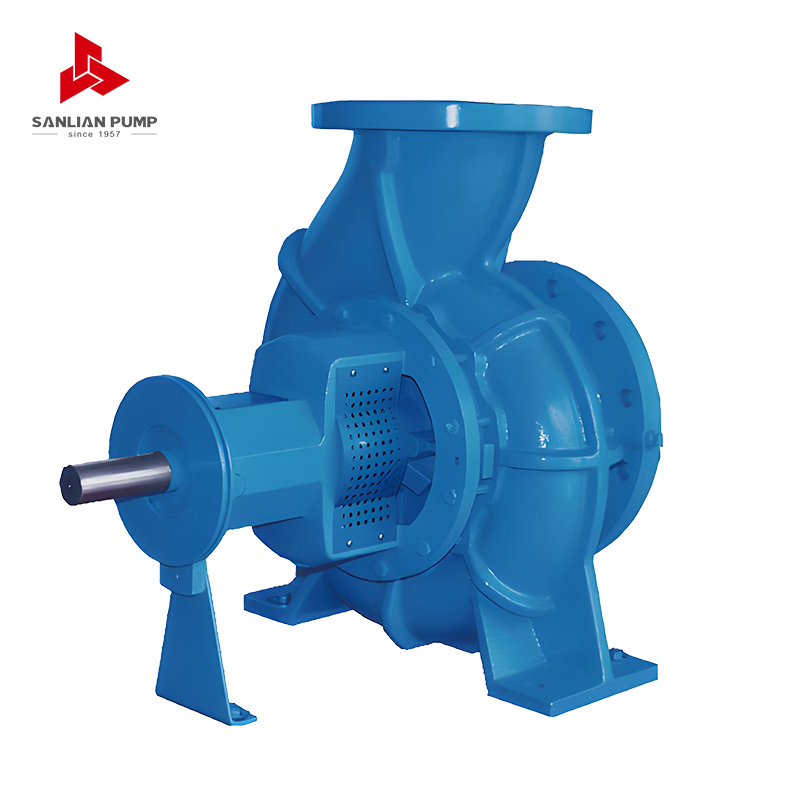
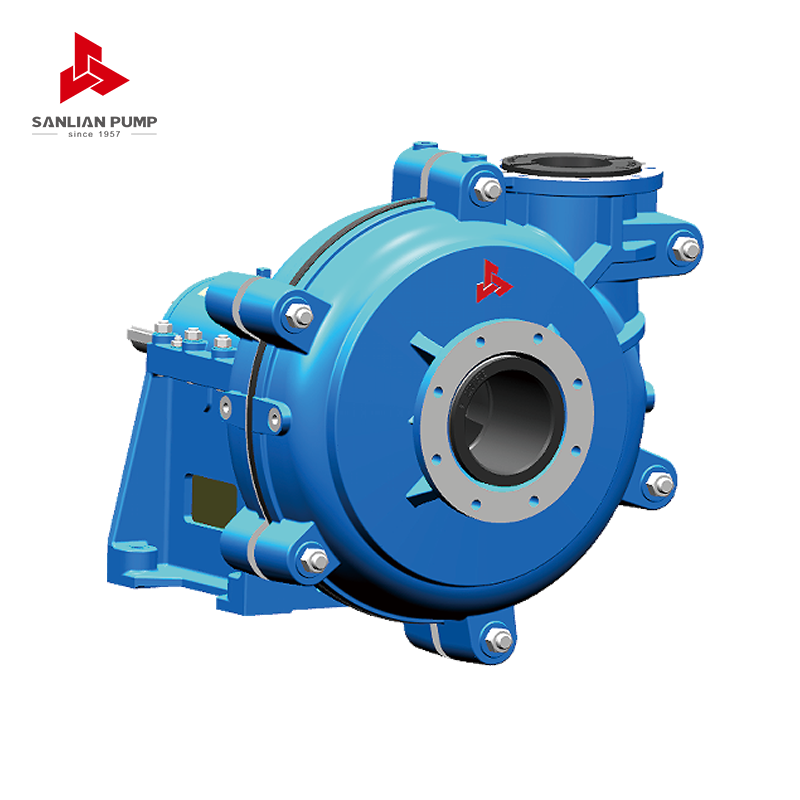
For smaller buildings and for jockey duty, a simple end suction centrifugal pump is often the most dependable answer: compact, easy to service, and available across a wide range of heads.
Where the water comes from matters just as much as the pump itself. A municipal main, a suction tank, a reservoir, or some combination of these will shape the selection, especially the available net positive suction head and whether the pump can run from a suction lift or needs to be flooded.
Matching the Pump Type to the Demand
End suction centrifugal pumps
Compact and straightforward, end suction pumps suit jockey duty, small systems, and moderate flows. Their limits tend to appear on the suction side, where long suction lifts and hot water both demand a careful NPSH check rather than an assumption.
Split case pumps
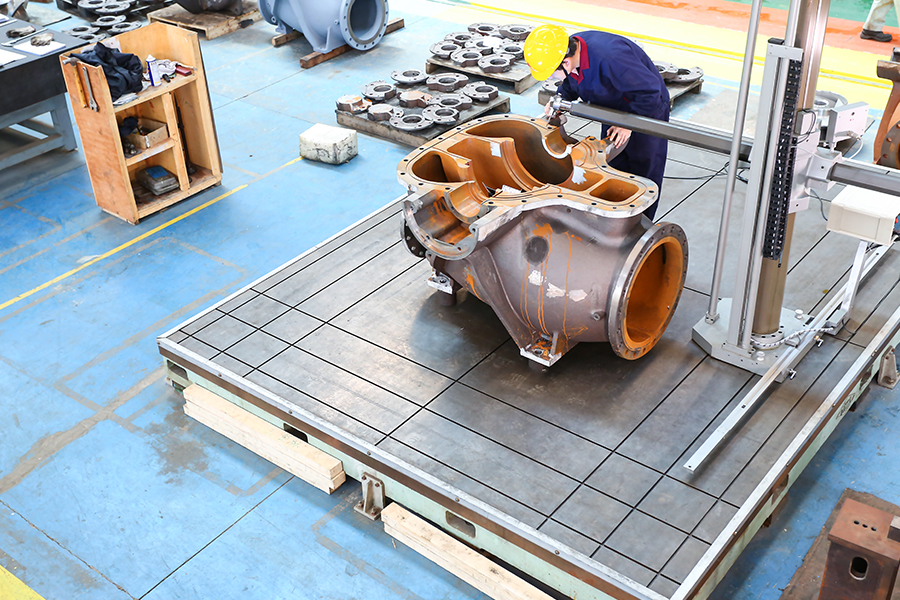
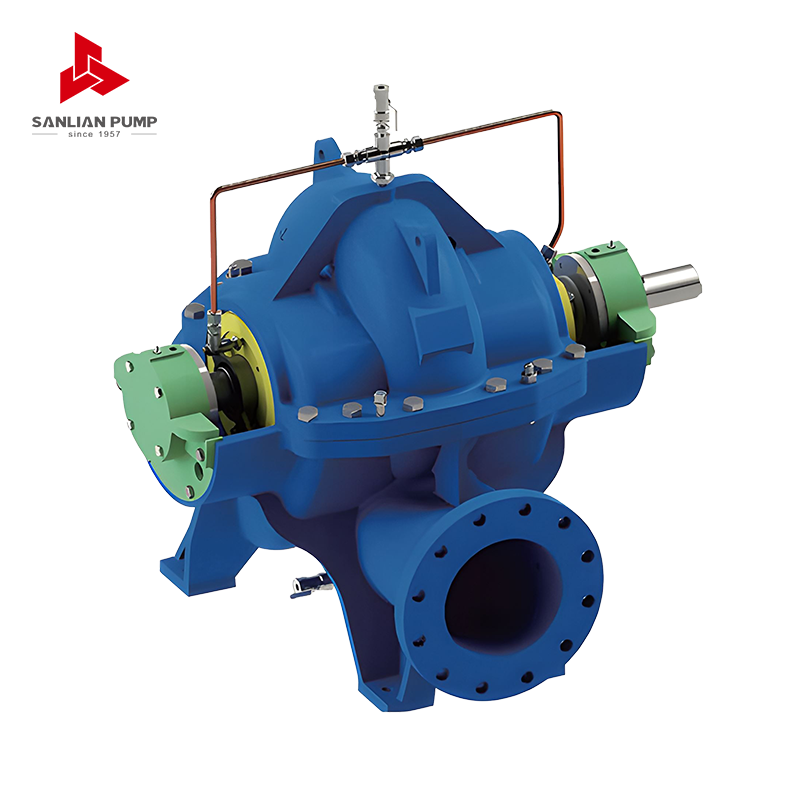
Where the demand is large, a horizontal split case pump earns its place. It delivers high flow at moderate head, and because the casing splits horizontally, the rotor can be inspected or lifted out without disturbing the suction and discharge pipework. In a plant where a fire pump cannot stay offline for long, that access is worth a great deal.
.png)
Multistage pumps
When high pressure has to come from a limited footprint, multistage pumps are the usual choice. Several impellers in series build head stage by stage, which suits tall buildings, long risers, and sites with demanding residual pressure requirements.
Some sites draw from a reservoir or tank with vertical turbine pumps instead. The principle does not change: the pump curve has to match the hydraulic demand of the system, and it has to do so with margin to spare.
Numbers Worth Getting Right Before You Buy
Most disappointing fire pump installations are not caused by a bad pump. They are caused by a demand calculation or a suction condition that was never properly worked through. These are the figures we insist on seeing clearly defined first:
- Design flow and residual pressure at the hydraulically most remote area, based on the hazard classification of the occupancy.
- Pump curve behaviour, since a fire pump is normally expected to deliver 150% of rated flow at not less than 65% of rated head, with shutoff head kept within specified limits.
- Suction conditions, comparing net positive suction head available against that required, together with the physical suction arrangement.
- Water supply duration, meaning how long the source can sustain the design flow without refilling.
- Driver reliability, and whether the site can tolerate an electric driver or needs a diesel engine for a power-loss scenario.
- Redundancy and maintenance access, so that a single pump being serviced does not leave the building unprotected.
Testing, Maintenance, and the Quiet Failures
Fire systems fail quietly. Nothing announces a partly closed valve or a corroded pipe branch until the day it actually matters. That is why the routine work deserves as much attention as the original design:
- Acceptance flow testing at churn, 100%, and 150% of rated flow, with results compared against the certified curve.
- Weekly no-flow running of engine-driven pumps, plus regular checks of controller set points and starting pressure.
- Annual flow tests and valve inspections under NFPA 25.
- Air pressure and trip-time checks on dry and pre-action systems, along with low-point drainage.
- Internal corrosion and microbiologically influenced corrosion checks, particularly in dry piping.
- A written impairment programme, so any shutdown is planned, logged, and kept as short as possible.
What Real Fire Water Projects Have Taught Us
Fire water work rarely looks the same twice. One of our oil depot projects involved expanding fire water capacity around an existing reservoir, which meant matching new pumps to a suction arrangement and a control philosophy that were already in place and could not simply be replaced.
Another was a more conventional fire pump installation, where the hydraulic side was straightforward and the real challenge was making sure the pump would start on demand every single time, with test records complete enough to satisfy the authority having jurisdiction. In both cases, the deciding factor was not the pump on its own. It was how carefully the whole chain, from water source to the last sprinkler head, had been thought through before anything was ordered.
Where to Start
If you are planning a new system or replacing an ageing one, begin with the demand: hazard classification, design area, flow, and pressure. Then work backwards through the suction conditions and the available water supply, and only then start comparing pump models. That order keeps the project honest and usually saves money at the same time.
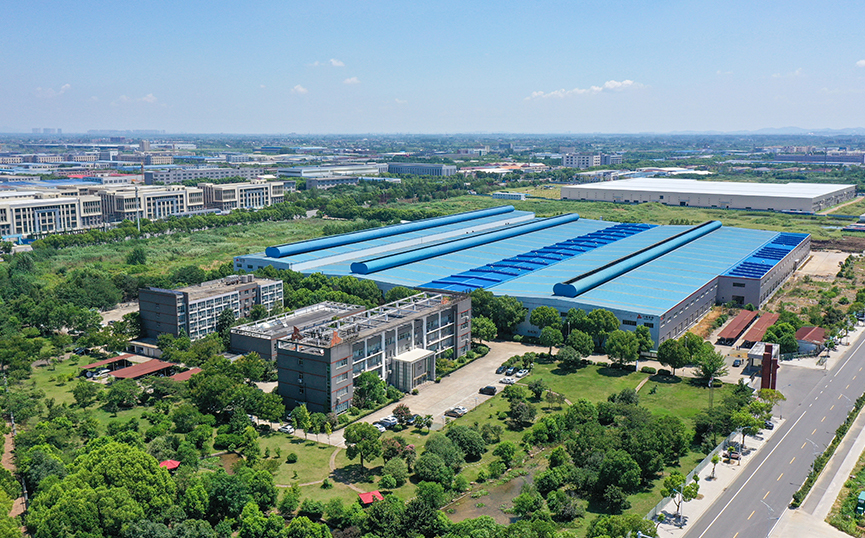
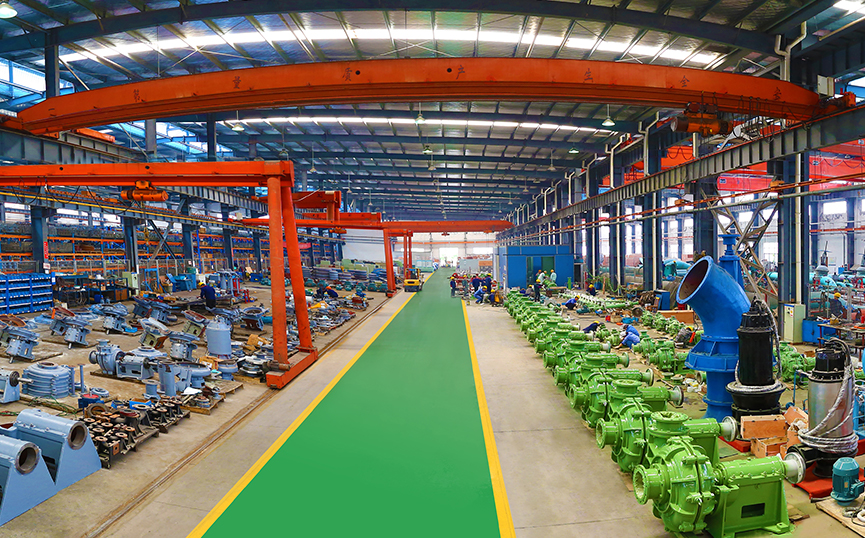
Sanlian Pump has been building pumps and fluid handling systems since 1957, and our engineers are happy to look at a set of drawings or a pump curve with you and talk through what the numbers actually mean for your building. Sometimes the most useful conversation happens well before the purchase order.



 English
 中文简体
中文简体 Français
 Español
 Português
 عربى
عربى

 皖公网安备34052302341647号