How Multistage Centrifugal Pumps Achieve High Pressure Output
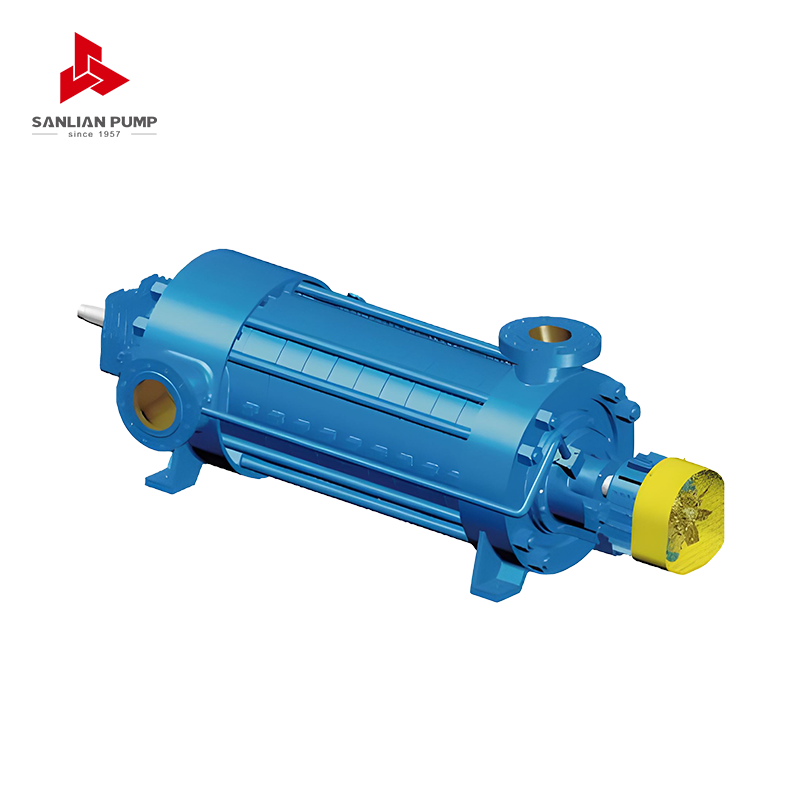
A multistage centrifugal pump is built around a series of impellers arranged sequentially within a single casing, with each impeller adding incremental pressure to the fluid as it passes through. Unlike a single-stage pump, which relies on one impeller to generate the required head, a multistage design distributes the workload across multiple stages, allowing the pump to achieve significantly higher discharge pressures without requiring an oversized single impeller. This staged approach makes multistage pumps particularly suited to applications where high pressure is needed over long pipeline distances, elevated vertical lifts, or demanding industrial processes.
As fluid enters the first stage, the rotating impeller accelerates it outward through centrifugal force, converting kinetic energy into pressure as it passes through the diffuser. The fluid is then redirected into the next stage, where the process repeats, with each successive impeller building upon the pressure generated by the previous one. By the time the fluid exits the final stage, the cumulative effect of multiple pressure additions results in a total head far exceeding what a single impeller could produce.
Core Components That Define Multistage Pump Design
Understanding the internal architecture of a multistage centrifugal pump helps clarify how each part contributes to overall performance and reliability.
Impeller Stages
Each impeller stage is precisely balanced and matched to the others to ensure smooth energy transfer throughout the pump. The number of stages, which can range from two to more than ten depending on the application, directly determines the maximum head the pump can achieve.
Diffusers and Guide Vanes
Diffusers positioned between stages guide the fluid smoothly from one impeller to the next while converting velocity into pressure. Properly designed guide vanes minimize turbulence and energy loss, which is essential for maintaining high efficiency across all stages.
Shaft and Bearing System
Since the shaft must support multiple impellers along its length, it requires robust bearing support to prevent deflection and vibration. Bearings positioned at strategic points along the shaft help maintain rotational stability, particularly in longer multistage configurations.
Balancing Drum or Disc
Because fluid pressure increases progressively through each stage, an axial thrust develops along the shaft. A balancing drum or disc offsets this thrust, protecting the bearings from excessive axial load and extending the operational lifespan of the pump.
Comparing Multistage and Single-Stage Pump Performance
The table below highlights key differences between multistage and single-stage centrifugal pumps to clarify when each configuration is most appropriate.
| Characteristic |
Single-Stage Pump |
Multistage Pump |
| Maximum Head Capability |
Lower, limited by single impeller |
Higher, cumulative across stages |
| Typical Applications |
Low-pressure water transfer |
Boiler feed, high-rise buildings, pipelines |
| Mechanical Complexity |
Simpler construction |
More complex, multiple stages |
| Maintenance Considerations |
Generally simpler servicing |
Requires stage-by-stage inspection |
Common Industrial Applications Where Multistage Pumps Excel
The ability to generate high pressure while maintaining a compact footprint makes multistage centrifugal pumps a preferred choice across a wide range of demanding industries.
- Boiler feedwater systems in power generation plants, where high-pressure water must be delivered continuously to maintain steam production.
- High-rise building water supply systems, where sufficient pressure is needed to deliver water to upper floors against gravity.
- Long-distance pipeline transport for water, oil, or chemical fluids requiring sustained pressure over extended horizontal runs.
- Irrigation systems covering large agricultural areas that demand consistent high-pressure water distribution.
- Reverse osmosis and desalination systems, where high pressure is essential to force water through fine membrane filters.
Factors That Influence Efficiency and Long-Term Reliability
Several design and operational factors determine how efficiently a multistage centrifugal pump performs over its service life.
Impeller and Casing Manufacturing Precision
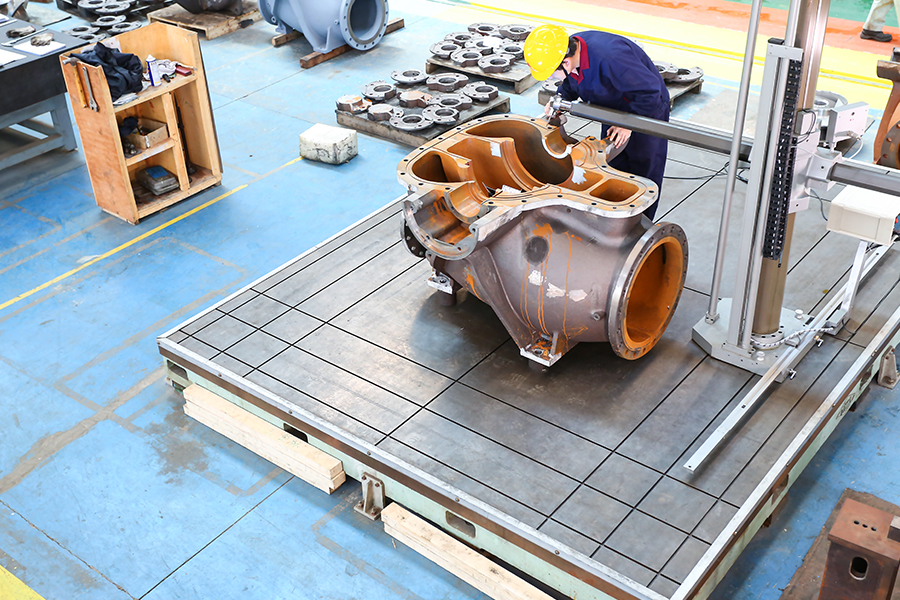
Tight tolerances between the impeller and casing minimize internal recirculation losses, which directly improves hydraulic efficiency. Precision-machined components reduce the gap where fluid can leak backward between stages, preserving the pressure gains achieved at each step.
Sealing System Selection
Given the elevated internal pressures present in multistage pumps, mechanical seals or packing systems must be rated appropriately to prevent leakage. Selecting a sealing solution matched to the pump's operating pressure and the fluid being handled helps avoid premature seal failure.
Material Compatibility With Pumped Fluids
Impellers, casings, and shaft sleeves must be constructed from materials compatible with the specific fluid being pumped, whether that involves corrosive chemicals, abrasive slurries, or high-temperature water. Mismatched materials can lead to accelerated corrosion or erosion, shortening the pump's operational lifespan.
Maintenance Practices That Support Consistent Operation
Because multistage pumps contain multiple internal stages, routine maintenance requires a more thorough approach than single-stage equivalents.
- Monitoring vibration levels regularly to detect early signs of bearing wear or shaft misalignment before they escalate into major failures.
- Inspecting mechanical seals periodically for leakage, as elevated internal pressures can accelerate seal degradation over time.
- Checking the balancing drum or disc condition during scheduled maintenance to confirm axial thrust is being properly managed.
- Verifying alignment between the pump and its driving motor to prevent uneven loading across the multiple bearing points along the shaft.
Selecting the Right Multistage Pump for Specific Operating Conditions
Choosing an appropriate multistage centrifugal pump requires evaluating the required flow rate, total dynamic head, and fluid characteristics of the intended application. Operators should also consider the number of stages needed to achieve target pressure without operating the pump outside its efficient performance range, since running a pump significantly off its best efficiency point can accelerate wear and increase energy consumption. Consulting detailed pump curves alongside system requirements ensures the selected unit delivers reliable performance while minimizing operational costs over its service life.



 English
 中文简体
中文简体 Français
 Español
 Português
 عربى
عربى

 皖公网安备34052302341647号