Anyone who has run a pump station for a couple of decades knows the pattern. The purchase order is signed, the set is installed, and then the real spending begins — quietly, month after month, on the electricity bill and in the maintenance store. The purchase price of a pump is rarely more than a fifth of what it costs to own, and on continuous duty it is often far less.
That is why life cycle cost analysis has become standard practice in serious procurement. Instead of comparing two quotations line by line, it compares two decisions across their whole service life: what you pay to buy and install the equipment, what you pay to run and maintain it, what it costs you when it stops, and what it is worth at the end.
What Pump Life Cycle Costs Actually Include
Life cycle cost, usually shortened to LCC, is the total cost of owning a pump or an entire pumping system from the day it is specified to the day it is retired. For a pumping application the main components are:
- Capital cost — the pump, motor, baseplate, controls, and any system changes needed to fit them.
- Installation and commissioning — foundations, pipework, alignment, electrical work and testing.
- Energy — the electricity drawn over thousands of running hours, year after year.
- Maintenance and spares — seals, bearings, wear rings, impellers, and the labour to change them.
- Downtime — lost output, emergency repairs and the cost of interrupting the process.
- Disposal — decommissioning, removal, and any residual or scrap value.
Only the first two items appear on the quotation. The rest accumulate slowly, which is exactly why they slip out of view when budgets are tight and a decision has to be made quickly.
Energy Is Usually the Largest Single Line
On continuous duty, energy typically accounts for half or more of the lifetime cost. A 90 kW unit running 6,000 hours a year at USD 0.10 per kWh will consume roughly USD 54,000 of electricity annually. A five-point improvement in overall efficiency — from better hydraulics, a properly matched duty point, or sensible speed control — saves about USD 2,700 a year, or some USD 54,000 across twenty years. Compare that with a price gap of a few thousand dollars between two sets of similar quality.
The lesson is not to compare efficiency figures in isolation. A pump is efficient at one flow rate, and a unit selected for a duty point it never actually reaches will disappoint no matter what its datasheet promises.
A Practical Breakdown of Cost Categories
The shares below are indicative rather than fixed, but they hold broadly true for industrial and municipal pumping duties. They are a useful sanity check when a supplier claims that a higher initial price will pay for itself.
Indicative lifetime cost shares for a continuously operated industrial pump; actual figures vary with duty, tariff, hours of operation and process criticality.
| Cost element |
Typical share of lifetime cost |
Where the savings hide |
| Purchase and installation |
10–20% |
Right-sizing, fair tendering, avoiding unnecessary safety margins |
| Energy |
40–60% |
Duty-point selection, efficient hydraulics, variable speed control |
| Maintenance and spares |
15–25% |
Wear-resistant materials, interchangeable parts, easy access |
| Downtime and lost output |
5–15% |
Reliability, condition monitoring, a sensible spare-in-hand policy |
| Disposal and residual value |
Small but real |
Recyclable castings, rebuilding instead of replacing |
Maintenance, Spares and Downtime: The Quiet Leak
Abrasive slurries, corrosive chemicals and high temperatures all raise the maintenance share quickly. Wear rings open up, impeller clearances grow, and the pump keeps running while quietly losing efficiency and drawing more power. Every rebuild costs parts, labour and lost production, and the third item is often the largest of the three.
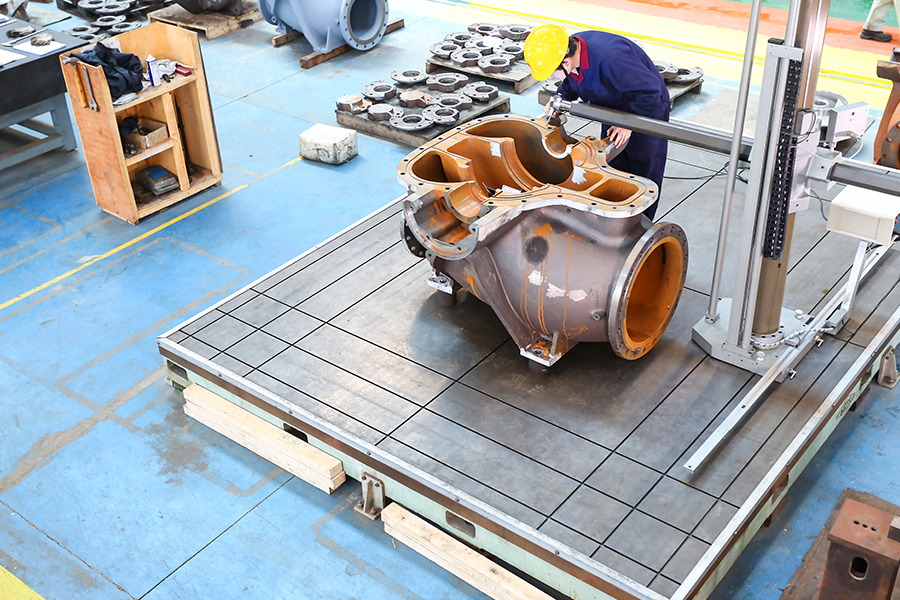
Most of that is decided long before the pump leaves the factory: how much material there is to wear away, whether the casing can be rotated, how easily the bearing housing is reached, whether the impeller can be trimmed on site, and whether spares are standard or bespoke. A pump that is quick to open and cheap to re-dress usually beats a slightly more efficient model that requires a crane and a week of downtime.
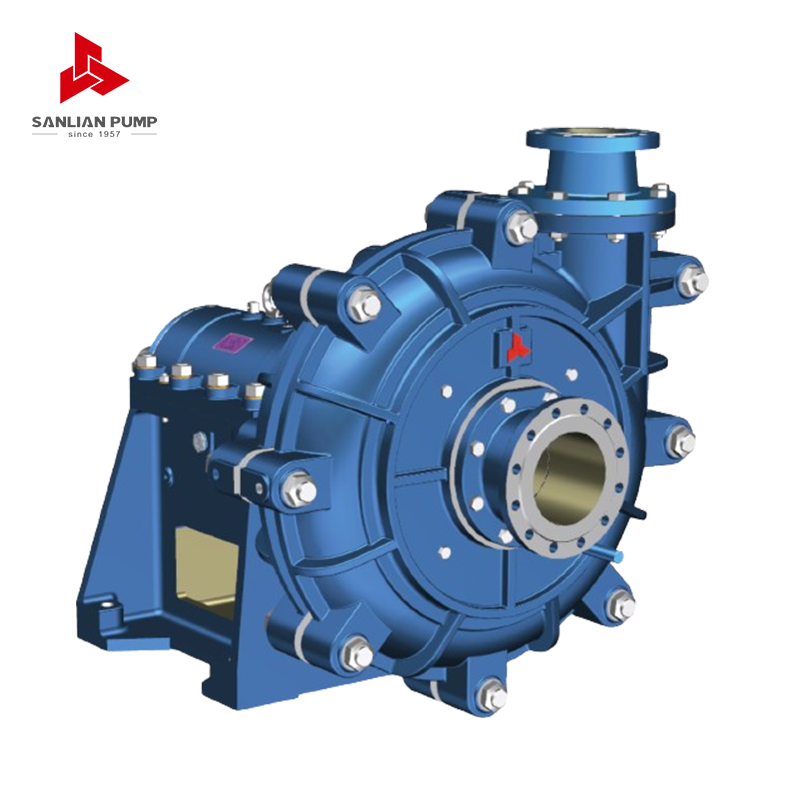
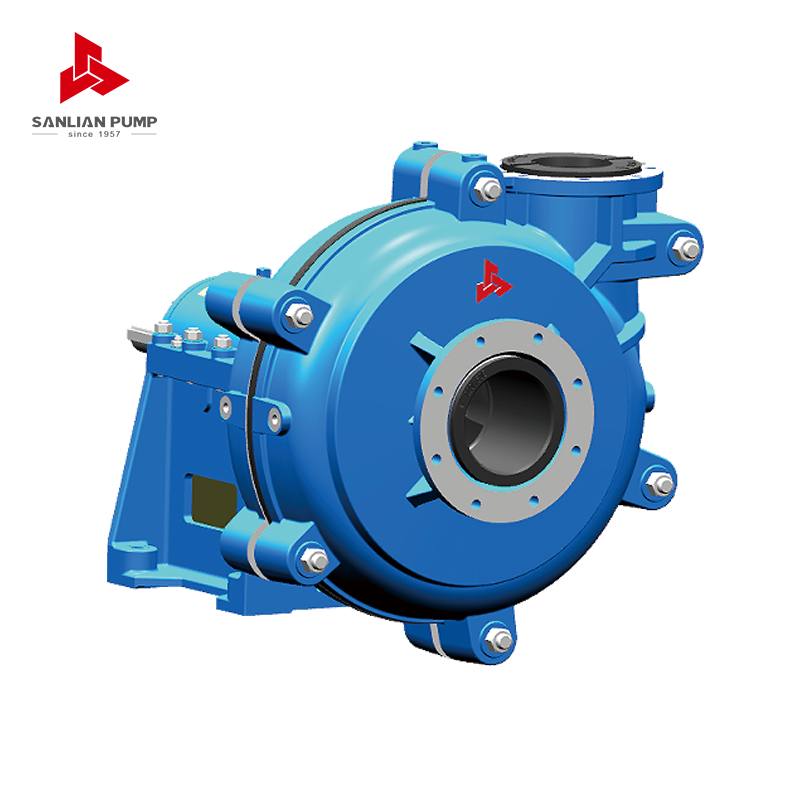 AH Series Horizontal Slurry Pumps for Abrasive SolidsSingle-stage centrifugal slurry pumps with DN 25–500 mm outlets and wear-focused designs, suited where abrasive solids make maintenance and re-dressing costs central.View Product →
Where solids and abrasion are part of daily life, treat wear parts as a consumable with a known cost per tonne handled rather than as an unwelcome surprise. That single change in accounting habit makes comparisons between pump designs far more honest.
Getting the Duty Point Right Saves More Than Any Discount
Oversizing is the most common cause of disappointing life cycle cost. Designers add margin for future demand, for fouling, for uncertainty — and the pump then runs far to the left of its best efficiency point, with recirculation, vibration and early bearing failure as the reward. Throttling a valve to compensate simply converts expensive electricity into noise and heat.
Three habits pay off repeatedly: build the system curve before choosing the pump, trim the impeller to the actual duty rather than accepting a stock diameter, and where flow varies meaningfully, use speed control instead of throttling. Each of these reduces energy and mechanical stress at the same time, which is rare in engineering.
How to Calculate Life Cycle Cost in Practice
A defensible comparison does not need a complicated model. It needs consistent assumptions across all the options being considered.
- Define the duty and the operating profile: flow, head, hours per year, and how the demand varies.
- Collect capital and installation costs on the same scope and the same date.
- Estimate annual energy use from shaft power, motor efficiency and the real operating profile.
- Add maintenance and spares over the planning horizon, using the wear-part consumption you actually expect.
- Put a number on downtime, even a rough one, based on lost output per hour of stoppage.
- Discount future costs to present value, with an assumed discount rate and an energy price escalation rate.
- Include disposal and any residual value at the end of the horizon.
In short: LCC = capital + installation + the discounted sum of annual energy, maintenance and downtime + disposal − residual value. In our experience two assumptions dominate the result — the discount rate and the energy price trajectory. Run the calculation at both a low and a high energy price; if the ranking of options does not change, the decision is robust and you can stop worrying about the fine detail.
Where LCC Thinking Changes the Decision
In large water supply and circulating systems, the pump runs almost continuously and the energy share climbs towards 60 percent. That is where a double-suction, split-case design earns its keep: high flow at moderate head, strong efficiency, and a horizontally split casing that lets a maintenance team inspect the rotor without disconnecting pipework.
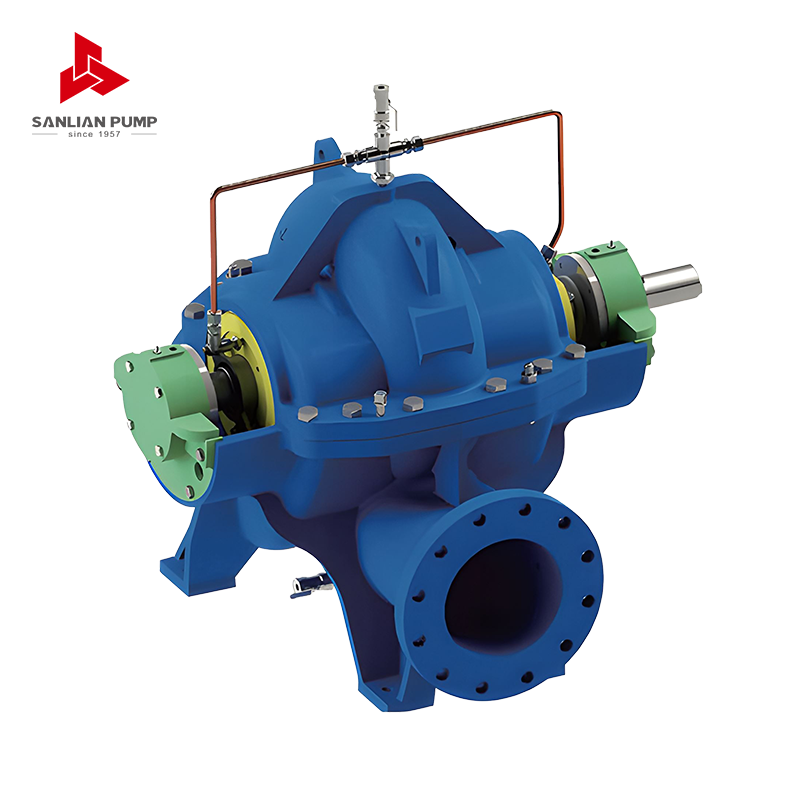
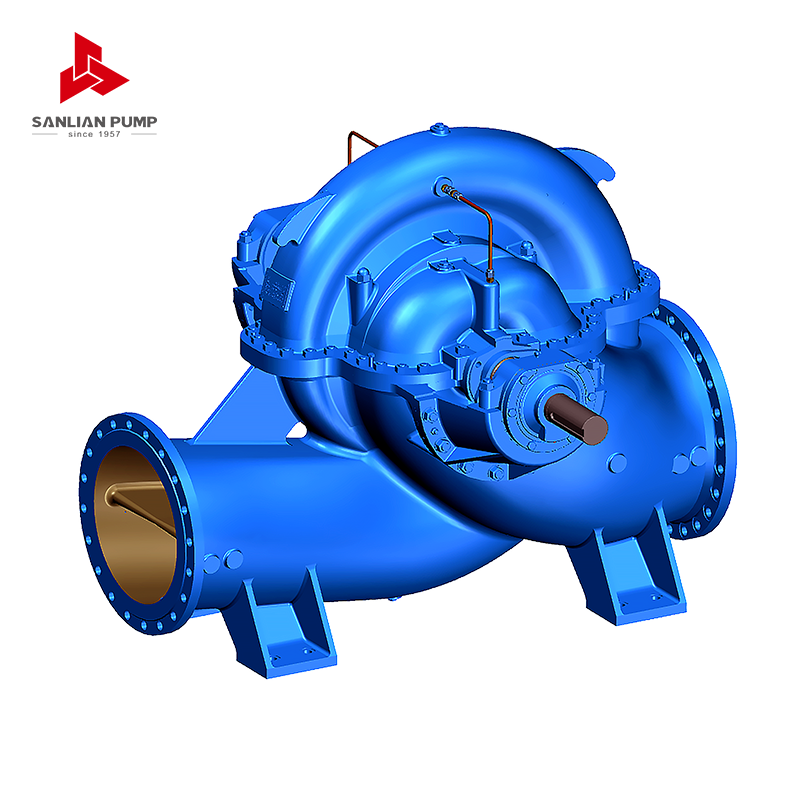 HS(V) Split-Case Double-Suction Centrifugal PumpsSingle-stage, double-suction pumps with horizontally split casing for high-flow water supply and circulating duties, allowing rotor inspection without disconnecting pipework.View Product →
For high-head services — boiler feed, mine dewatering, long-distance transfer — the choice usually falls to a multistage design, where stage count can be matched closely to the duty instead of relying on a single oversized impeller.
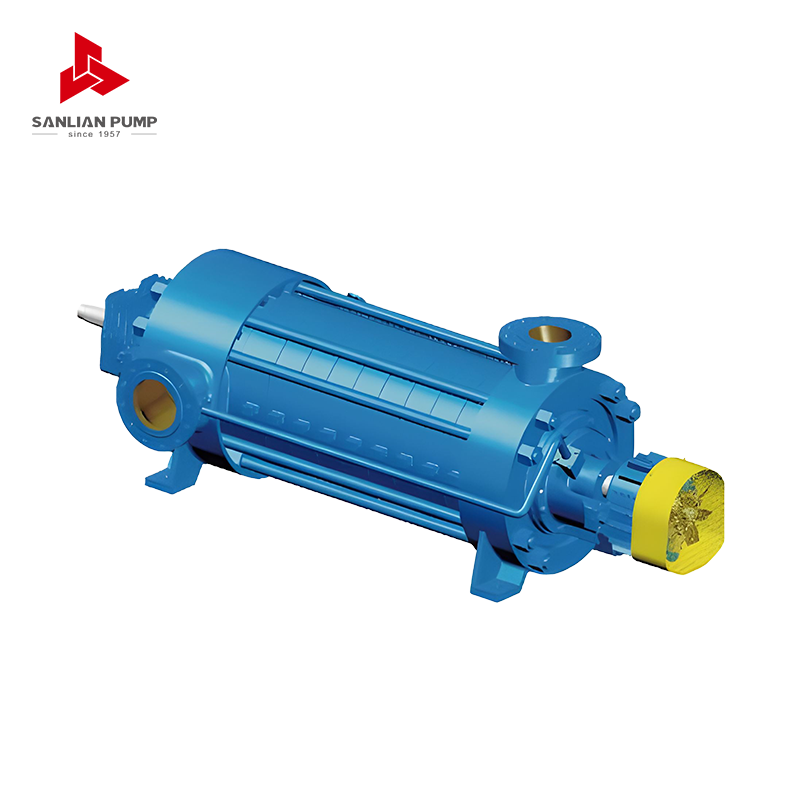 MD(S) Series Multistage Centrifugal Pumps for Mine DrainageHorizontal multistage pumps with 50–1000 m head for high-head mine dewatering and transfer duties, including wear-resistant MD variants for mine water with limited solids.View Product →
Real projects show the same logic at work. When a mine drainage system is renewed, the driver is rarely the purchase price; it is the cost of a flooded level and the years of electricity that follow — the reasoning behind the Handan mining group main drainage pump project. Municipal transfer schemes make the point even more plainly, because the running hours are so long that efficiency differences compound into serious money, as in the Puyang South-to-North water diversion supporting works.
Common Mistakes That Distort the Comparison
- Comparing capital cost only, then discovering the energy bill later.
- Using nameplate efficiency instead of efficiency at the actual duty point.
- Ignoring the cost of downtime because it does not appear on any invoice.
- Assuming maintenance costs are identical across designs when access and part commonality differ sharply.
- Discounting future savings so heavily that no efficiency investment ever looks worthwhile.
- Forgetting that the system — pipework, valves, controls — often offers cheaper savings than the pump itself.
The Long View Always Wins
Life cycle cost analysis is not an accounting exercise for its own sake. It is a way of asking better questions at the specification stage, when changes are still cheap: what will this set cost us to run, what will it cost us to keep, and what happens on the day it stops? Get those answers right and the purchase price settles into its proper place — a small fraction of a decision that will be judged for the next twenty years.
We have been building pumps since 1957, and the conversations we value most are the ones that start with a duty profile rather than a price. If you are weighing up options for a new station or a replacement programme, bring us the operating hours and the tariff — that is usually where the real answer is hiding.




 English
 中文简体
 Français
 Español
 Português
 عربى


 皖公网安备34052302341647号