Why Choosing the Right Water Pump Type Matters
Water pumps are among the most widely deployed pieces of mechanical equipment across agriculture, construction, municipal infrastructure, and industrial processing. Yet selecting the wrong pump type — even one with adequate flow rate and pressure — routinely results in premature failure, excessive energy consumption, and costly downtime. The global water pump market exceeded $68 billion in 2023 and continues to grow, driven by increasing demand for efficient fluid management across sectors. Understanding what differentiates each pump type at a technical and application level is the foundation of any sound pump selection decision.
Water pumps are broadly divided into two engineering categories: dynamic pumps, which add velocity energy to fluid and convert it to pressure, and positive displacement pumps, which move fixed volumes of fluid per cycle regardless of system pressure. Each category contains multiple subtypes with distinct operating principles, strengths, and limitations. This guide covers the most important pump types in practical detail.
Centrifugal Pumps: The Industry Workhorse
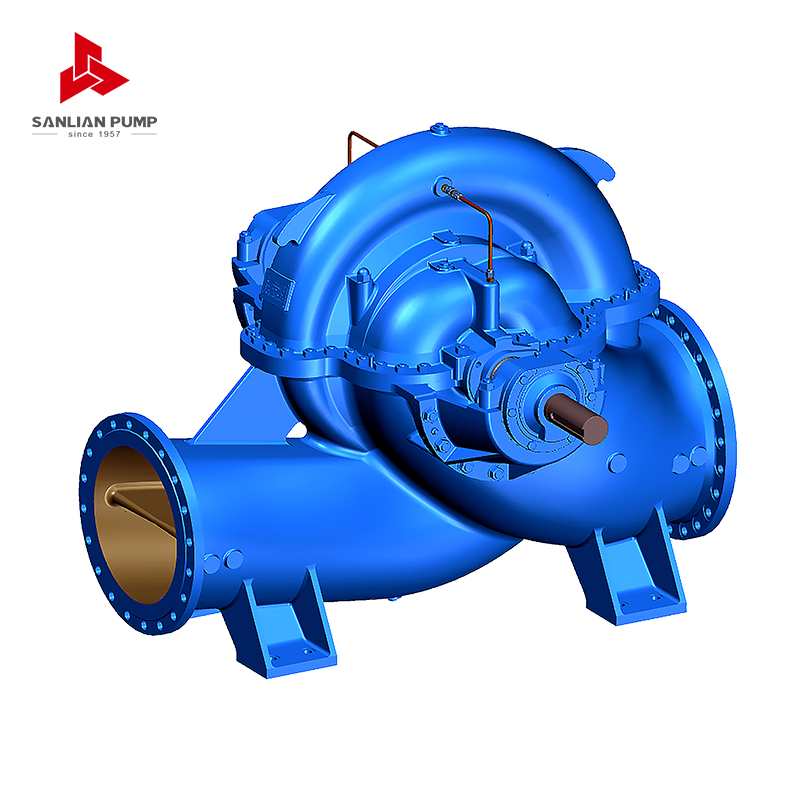
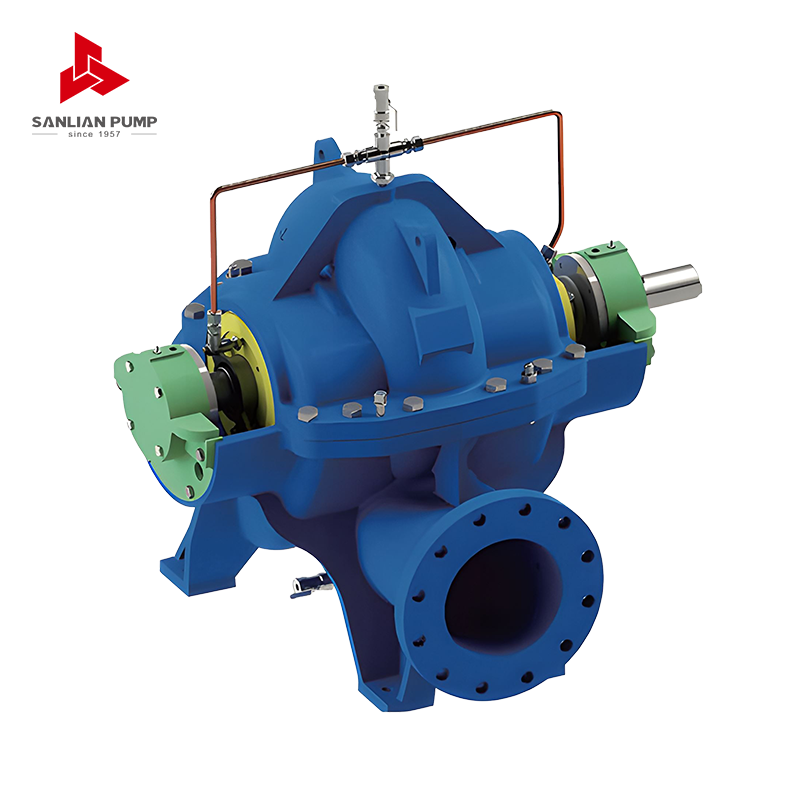
Centrifugal pumps are the most widely used pump type globally, accounting for roughly 70–75% of all pumps installed in industrial and municipal systems. They operate by spinning an impeller at high speed, which imparts centrifugal force to the fluid and accelerates it outward into a volute or diffuser casing where velocity converts to pressure energy. Their simplicity — few moving parts, no valves, and continuous flow — makes them highly reliable and easy to maintain.
Centrifugal pumps perform best with low-viscosity fluids such as water, light chemicals, and thin slurries. They are used in water supply systems, HVAC circulation, irrigation networks, fire suppression, and cooling loops. Key parameters include flow rate (measured in m³/h or GPM), head (measured in meters or feet), and the pump's Best Efficiency Point (BEP) on its performance curve. Operating far from the BEP — either at low flow or excessive head — accelerates wear and reduces efficiency.
End-Suction vs. Multi-Stage Centrifugal Pumps
Single-stage end-suction centrifugal pumps handle moderate head (typically up to 80 m) and high flow rates, making them ideal for general water transfer and irrigation. Multi-stage centrifugal pumps stack multiple impellers in series to achieve heads exceeding 1,000 m, and are used in high-rise building water supply, boiler feed, and reverse osmosis systems. The choice between single and multi-stage directly depends on required total dynamic head (TDH), not just flow volume.
Submersible Pumps: Designed to Operate Underwater
Submersible pumps are sealed units where the motor and pump are fully submerged in the fluid being pumped. Because the pump operates below the water surface, it eliminates cavitation risk from suction lift and requires no priming. The motor is hermetically sealed and cooled by the surrounding fluid. Submersible pumps are highly efficient for applications where the fluid source is deep or where surface-mounted pumps cannot create sufficient suction head.
Common applications include deep well water extraction (borehole depths from 30 m to over 300 m), sewage and wastewater lifting stations, drainage of flooded basements or construction sites, and aquaculture circulation. Submersible sewage pumps include vortex or semi-open impellers specifically designed to pass solid particles up to 50–80 mm diameter without clogging. When selecting a submersible pump, sand content, motor insulation class, and cable quality are critical factors given the submerged environment.
Jet Pumps: Surface-Mounted Solutions for Shallow and Deep Wells
Jet pumps use a Venturi injector to create suction by forcing high-pressure water through a nozzle and diffuser assembly, generating a low-pressure zone that draws water from the source. They are installed above ground, which makes them accessible for maintenance, but limits their practical suction depth. Shallow well jet pumps operate reliably at water table depths up to approximately 7–8 m (25 feet). Deep well jet pumps move the ejector assembly down into the well, extending effective lift to 20–35 m (65–120 feet) by recirculating a portion of the pumped water as drive flow.
Jet pumps are commonly used for residential well water supply, garden irrigation, and light agricultural applications. Their self-priming capability (once initially primed) and simple mechanical design appeal to installations without access to submersible pump servicing. However, jet pumps consume more energy per unit of water delivered compared to submersible pumps at equivalent depths, because energy is consumed driving the ejector circuit in addition to lifting and pressurizing the output flow.
Diaphragm Pumps: Precision Dosing and Chemical Handling
Diaphragm pumps are positive displacement pumps in which a flexible membrane — the diaphragm — reciprocates to alternately expand and compress a fluid chamber. Check valves on the inlet and outlet ensure unidirectional flow. Because the diaphragm physically separates the fluid from the drive mechanism, these pumps are inherently leak-free and ideal for handling corrosive chemicals, abrasive slurries, and hazardous fluids that cannot contact standard mechanical seals or lubricants.
Mechanically actuated diaphragm pumps are used in water treatment for chlorine, polymer, and pH-adjustment chemical dosing, where accurate metering at flow rates of 0.1–1,000 L/h is required. Pneumatically operated double-diaphragm (AODD) pumps, driven by compressed air, are used for paint transfer, mining slurry handling, and food processing where explosion-proof operation and easy solids passage are needed. Diaphragm pumps can run dry without damage — a significant operational advantage over centrifugal types.
Gear Pumps and Peristaltic Pumps: Specialized Positive Displacement Types
Gear Pumps for High-Viscosity Fluids
Gear pumps use two intermeshing gears rotating inside a close-tolerance housing to trap and transport fluid from inlet to outlet. They excel with viscous fluids — including hydraulic oil, fuel oil, polymer melts, and adhesives — at viscosities from 100 to over 100,000 cP where centrifugal pumps would be completely ineffective. Flow rate in a gear pump is directly proportional to rotational speed, making them straightforward to control via variable speed drives. Internal gear pumps are smoother and quieter; external gear pumps are simpler and more cost-effective for industrial service.
Peristaltic Pumps for Shear-Sensitive and Sterile Applications
Peristaltic pumps move fluid by progressively squeezing a flexible tube or hose using rollers or shoes. The fluid contacts only the interior of the tube — never the pump mechanism — making these pumps ideal for pharmaceutical manufacturing, food and beverage processing, laboratory reagent dosing, and biological fluid transfer where sterility and zero cross-contamination are mandatory. Peristaltic pumps also handle shear-sensitive fluids such as blood or fragile cell suspensions without damage. Tube replacement every 500–3,000 hours (depending on material and duty) is the primary maintenance requirement.
Comparison of Major Water Pump Types at a Glance
The table below provides a structured comparison of the pump types covered in this guide, matched against their key operating parameters and primary application areas:
| Pump Type |
Operating Principle |
Typical Head Range |
Best For |
| Centrifugal |
Rotodynamic |
5 – 1,000+ m |
Water supply, HVAC, irrigation |
| Submersible |
Rotodynamic (submerged) |
10 – 400 m |
Deep wells, sewage, drainage |
| Jet Pump |
Venturi / Ejector |
Up to 35 m suction |
Residential wells, irrigation |
| Diaphragm |
Positive Displacement |
Up to 70 bar (dosing) |
Chemical dosing, slurries |
| Gear Pump |
Positive Displacement |
Up to 200 bar |
Viscous fluids, hydraulics |
| Peristaltic |
Positive Displacement |
Up to 8 bar |
Pharma, food, lab dosing |
Table 1: Summary Comparison of Major Water Pump Types
Key Factors to Evaluate Before Selecting a Pump Type
Selecting the correct pump requires systematic evaluation across several technical and operational dimensions. Rushing this process based on price or brand familiarity alone is a leading cause of pump underperformance in the field. The following factors should be assessed for every pump selection decision:
- Required flow rate and head: Plot the system curve (static head + friction losses at various flow rates) and confirm the pump's performance curve intersects it near the BEP. A flow rate and head mismatch of more than 15–20% from the BEP shortens seal and bearing life significantly.
- Fluid properties: Viscosity, density, pH, solids content, and temperature all affect pump selection. Fluids above 50 cP reduce centrifugal pump efficiency sharply. Abrasive slurries require hardened impellers or positive displacement designs. Corrosive fluids demand non-metallic or alloy wetted parts.
- Installation environment: Submerged or surface-mounted? Indoor or outdoor? Explosion-proof zone? Available power supply (single-phase, three-phase, or pneumatic)? These constraints narrow the viable pump types before any performance calculation begins.
- Duty cycle and maintenance access: Continuous-duty industrial pumps require different material grades and seal configurations than intermittent-duty agricultural pumps. Remote locations with limited service access favor self-priming, low-maintenance designs such as submersible or diaphragm pumps.
- Total cost of ownership: Include energy costs over the service life, not just purchase price. A premium-efficiency centrifugal pump with an IE4 motor may cost 30% more upfront but reduce electricity consumption by 10–15% over 10 years, yielding net savings many times the price premium.
Matching Pump Types to Common Real-World Scenarios
Rather than working from abstract specifications alone, it helps to map pump types directly to familiar use cases. Below are practical recommendations across the most common water pumping scenarios:
- Residential well water supply (depth <8 m): Shallow well jet pump or small centrifugal surface pump with pressure tank. Simple, affordable, and serviceable without specialized equipment.
- Residential well water supply (depth 20–100 m): 4-inch or 6-inch submersible borehole pump with stainless steel construction. More efficient and reliable than deep well jet pumps at this depth range.
- Drip irrigation for medium-scale agriculture: End-suction centrifugal pump with sand filter and fertigation injector. Flow rates of 10–100 m³/h at 3–6 bar are typical for field-scale drip systems.
- Municipal wastewater lifting station: Submersible sewage pump (non-clog impeller, vortex design) with duplex configuration for redundancy. Sized for peak wet weather flow with at least N+1 pump redundancy.
- Water treatment chemical dosing: Motor-driven diaphragm metering pump with PTFE-lined wetted parts and pulse dampener. Accuracy of ±1% across turndown ratio of 1:10 is achievable with modern digital control.
- High-rise building pressure boosting: Variable-speed multi-stage centrifugal pump set with pressure sensor feedback. Inverter-driven operation eliminates pressure surges and saves 20–40% on pump energy versus fixed-speed systems.



 English
 中文简体
中文简体 Français
 Español
 Português
 عربى
عربى

 皖公网安备34052302341647号