A fire water pump system is the backbone of any modern active fire protection installation. It takes water from a dedicated storage tank, reservoir, or approved municipal main and delivers it at the pressure and flow rate required by sprinklers, hydrants, and standpipes. Because the pump operates only in an emergency, its starting reliability, hydraulic performance, and mechanical integrity must never be compromised. Engineers, contractors, and plant operators all need a clear understanding of how these systems are designed, which pump types suit different duties, and what it takes to keep them ready around the clock.
This guide shares the practical experience of a pump manufacturer that has supplied fire protection equipment to oil depots, chemical plants, power plants, and industrial facilities for decades. From core components and pump types to selection, installation, and maintenance, here is what matters most when specifying a fire water pump system.
Core Components of a Fire Water Pump System
Every fire water pump system is built around one or more centrifugal pumps, but the complete package includes several carefully matched components. The main fire pump is the primary unit that supplies the design flow of water to the fire protection network. A jockey or pressure-maintenance pump, typically a small multistage pump, replaces minor leaks in the system so that the main pump does not start and stop frequently. Controllers and switchgear supervise motor operation, and in larger installations a diesel-driven backup pump is paired with the electric unit to provide redundancy when the power supply is interrupted.
- Main fire pump (horizontal split case or end suction) — provides the full design flow and pressure for the fire protection system.
- Jockey pump — compensates for pressure loss and leakage, maintaining system pressure at all times.
- Pump controller — controls starting and stopping, monitors fault conditions, and delivers alarm signals.
- Diesel drive (optional) — supplies a second independent power source when electrical power fails.
- Suction and discharge piping, valves, and headers — distribute water to the sprinkler risers and hydrants.
- Water supply — fire tank, reservoir, or approved municipal water connection with adequate net positive suction head.
Design codes such as NFPA 20 provide detailed guidance on pump selection, drivers, controllers, and installation practices. Following these standards helps ensure that the system will deliver the expected protection during a real emergency.
Main Types of Fire Water Pumps
Centrifugal pumps dominate fire protection because they can supply large flows at stable pressures and handle sudden changes in demand. Three arrangements are particularly common.
End Suction Centrifugal Pumps
End suction centrifugal pumps are a compact and economical choice for smaller fire protection duties. They are installed horizontally or vertically with the suction nozzle on the pump casing and the discharge nozzle pointing upward or at an angle. These pumps are widely used in warehouse protection systems, small industrial plants, and commercial buildings where the required flow is moderate. Their close-coupled or bearing-supported construction simplifies installation and maintenance.
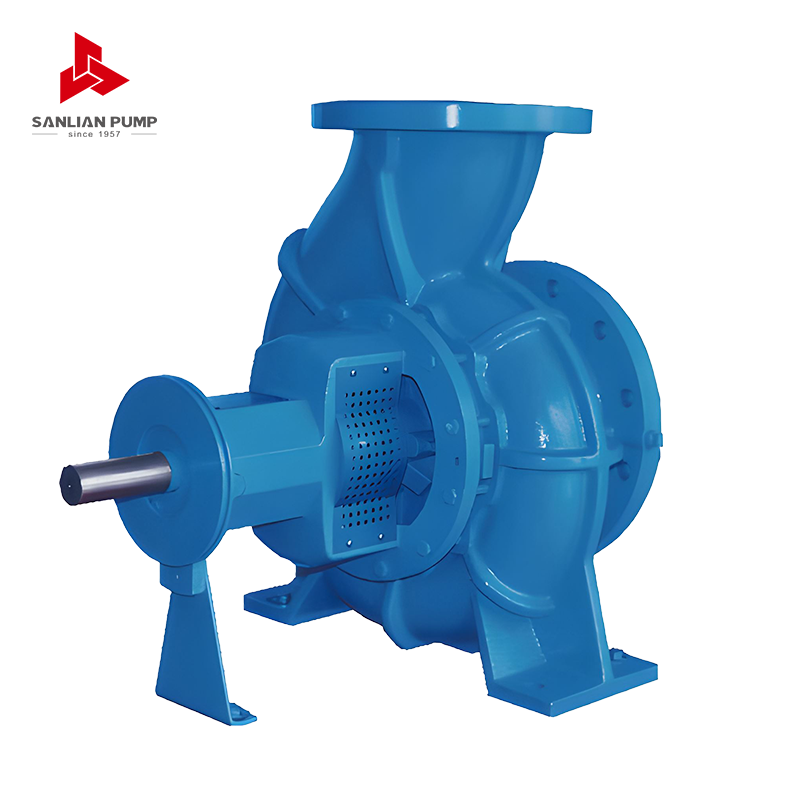 SPE Series Horizontal End-Suction Centrifugal Pump for Fire ProtectionThis compact horizontal end-suction pump suits moderate flow demands in warehouses, small plants, and commercial buildings. Its simple structure and reliable performance make it a practical option for smaller fire sprinkler systems.View Product →
Horizontal Split Case Pumps
For high-capacity systems, horizontal split case pumps are the traditional first choice for most fire water pump applications. The casing is split in a plane parallel to the shaft, so the upper casing half can be lifted to inspect the impeller, wear rings, and mechanical seals without disturbing the suction or discharge piping. These pumps generally produce better efficiency than end suction designs at higher flow rates, and their double-suction impellers balance axial thrust and reduce bearing loads. They provide the reliable, long service life that fire protection managers expect.
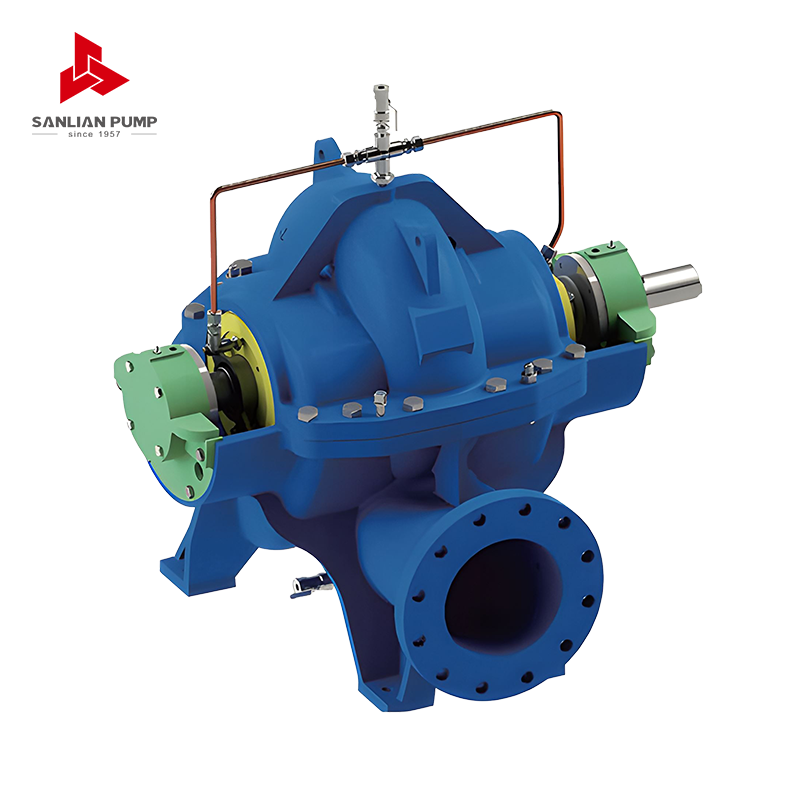 HSN Series Horizontal Split-Case Double-Suction Centrifugal PumpFor high-capacity fire water systems, this split-case pump offers easy maintenance without disturbing piping. Its double-suction impeller balances axial thrust, improving efficiency and bearing life for demanding fire protection duties.View Product →
Vertical Multistage Pumps for Jockey and Booster Duty
Vertical multistage pumps are ideal jockey pumps because they deliver high pressure at relatively low flow rates, and their slim footprint saves floor space near the main fire pump. They are also used for pressure boosting in sprinkler systems where site conditions create large static head differences between floors. The multistage construction gives a steep performance curve, which helps keep system pressure steady when the main fire pump starts and stops.
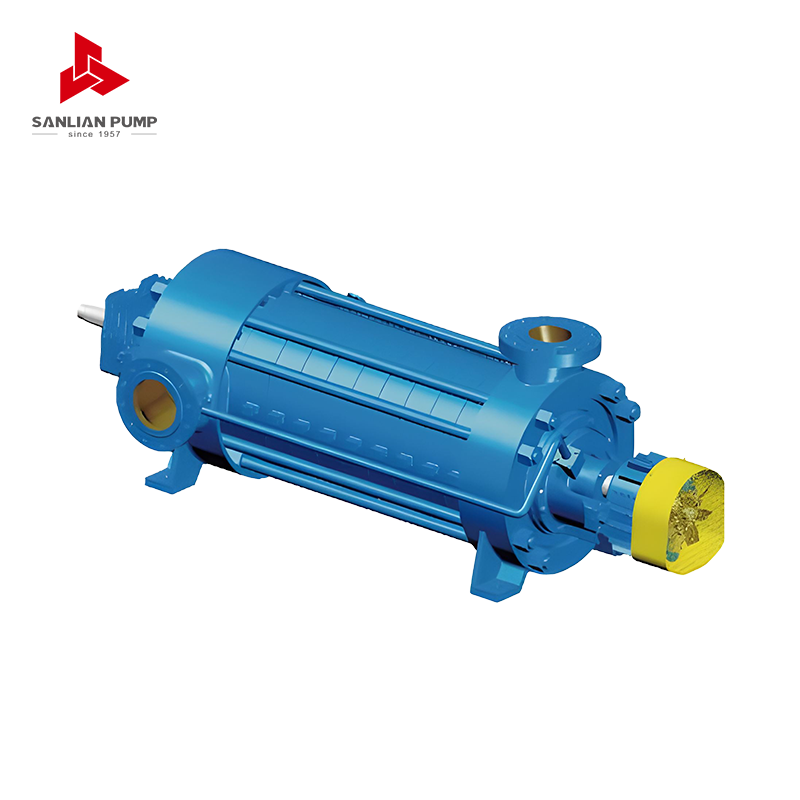 MD(S) Series Multi-Stage Centrifugal Pump for High-Pressure BoostingThis horizontal multistage pump delivers high pressure at low flow, ideal for jockey pump service or pressure boosting. Wear-resistant versions handle mine water with solids, ensuring steady system pressure during fire pump operation.View Product →
How to Select a Fire Water Pump System
Selecting the right fire water pump system begins with hydraulics and ends with duty, reliability, and code compliance. The system designer first calculates the maximum demand of the protected area from sprinkler densities and expected fire areas or from the required flow for hydrants and standpipes. The total head is then determined from the highest sprinkler elevation, friction losses in the distribution network, and the minimum pressure required at the most remote sprinkler.
The table below summarizes the key considerations that engineers evaluate before specifying a fire pump package.
Key selection factors for a fire water pump system
| Selection Factor |
What to Consider |
| Required flow |
Calculated from sprinkler and hydrant demand for the highest hazard area |
| Total head |
Elevation difference, pipe friction, and minimum end-pressure at the most remote fixture |
| NPSH available |
Water supply elevation and tank outlet position must secure positive suction conditions |
| Driver type |
Electric motors normally, with a diesel engine or alternative power for backup duty |
| Redundancy |
Second pump or day tank to maintain fire protection during outages or maintenance |
| Control scheme |
Automatic start on pressure drop and manual override for testing and emergency operation |
In addition to the hydraulic calculation, the pump must meet the requirements of the local fire protection code and, in many countries, standards equivalent to NFPA 20. The manufacturer should always be invited to review the duty point and provide the full performance curve, NPSH curve, and dimensional drawing before the package is finalized.
Fire Water Pump Applications in Industrial and Commercial Projects
Fire water pump systems are needed wherever the consequence of a fire is severe and a dependable water supply must be delivered quickly. Industrial facilities are especially demanding because they may store large volumes of flammable liquids or involve high-temperature processes. For example, Sanlian supplied fire pumps for the expansion of the Fu Niu Xi oil depot of PetroChina Chongqing Sales Branch. That project demonstrates how a carefully selected pump package protects the transfer and storage of refined petroleum products — one of the harshest fire risk environments in the energy industry. The full project review is available on our Fu Niu Xi oil depot fire pump project page.
Chemical plants, power stations, underground mines, airports, and high-rise logistics centers all rely on similar systems. In each case, the designer must decide whether an electric or diesel-driven pump is more suitable, whether the pump room will meet fire-rating requirements, and how the system will be maintained during a long service life. A pump supplier experienced in industrial fire protection can make this process substantially easier by recommending proven equipment packages.
Installation, Commissioning, and Maintenance Considerations
Even a correctly selected fire pump will underperform if installation and maintenance are neglected. During installation, the pump must be mounted on a concrete foundation that is massive enough to absorb vibration, and the suction piping should be as short and straight as possible to avoid air pockets and turbulence. A positive suction head is strongly preferred for fire pump rooms, since it simplifies priming and starting. For the same reason, fire pumps are rarely installed on the roof of a building unless the suction tank is engineered carefully.
Commissioning includes a performance test at the rated duty, verification of the controller set points, and a demonstration of the automatic start sequence. After commissioning, the owner should define a maintenance program based on the pump manufacturer's manual. Weekly checks of packing or seals, monthly test runs of the diesel engine, and an annual full-flow test are the minimum hygiene measures for a fire protection system.
One useful reference for a packaged supply approach is the Tianying fire pump case study, which shows how a standardized pump package can be delivered quickly for a municipal or industrial application.
Why Choose Sanlian Pump for Fire Water Pump Systems
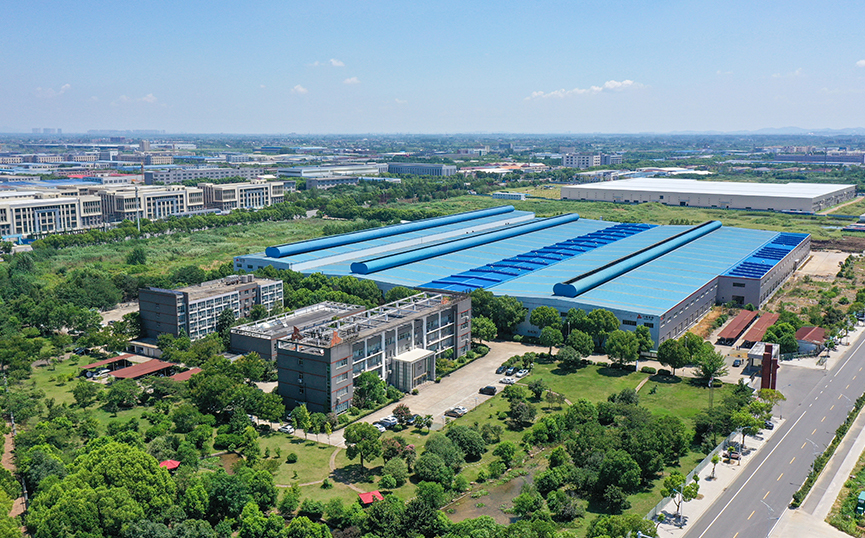
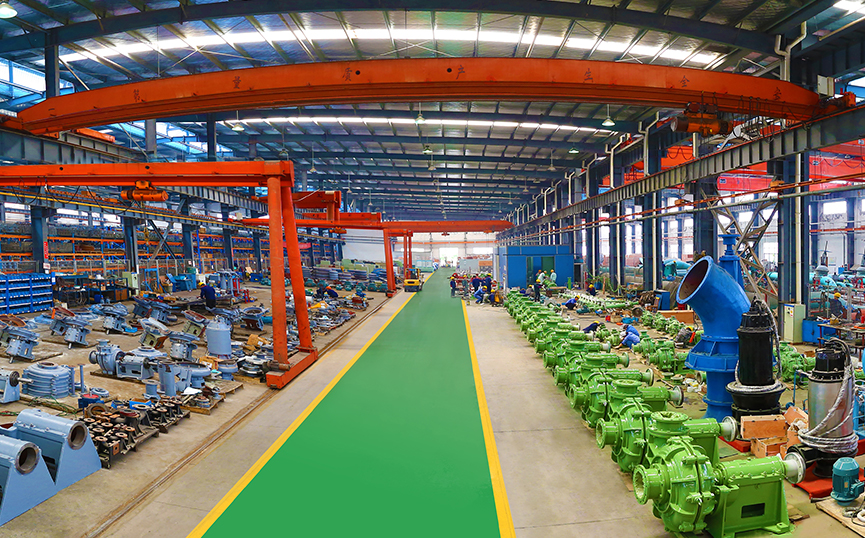
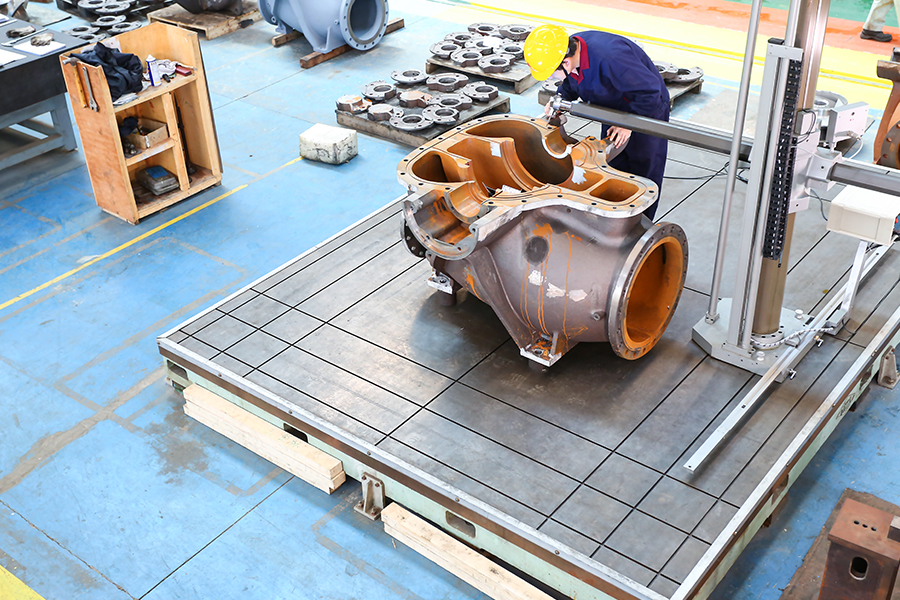
Sanlian Pump Industry has been manufacturing pumps since 1957, and today the company integrates casting, design, machining, assembly, and testing under one roof. With more than 500 technical staff and over 30 service offices around the world, the company is able to support fire water pump projects from the initial hydraulic calculation through commissioning and after-sales service.
Our in-house foundry produces the impellers, pump housings, and structural components used in our fire pump packages. This vertical integration gives us tight control over material quality and delivery schedules — a decisive advantage for time-critical fire protection projects. Beyond individual pumps, we also supply complete fluid handling systems and skid-mounted pump packages, making us a single responsible partner for engineering contractors and plant owners. Contact our engineering team with your duty point, site conditions, and applicable code requirements, and we will propose a cost-effective, code-compliant fire water pump system.



 English
 中文简体
中文简体 Français
 Español
 Português
 عربى
عربى


 皖公网安备34052302341647号