What Makes SP Submersible Slurry Pumps Different
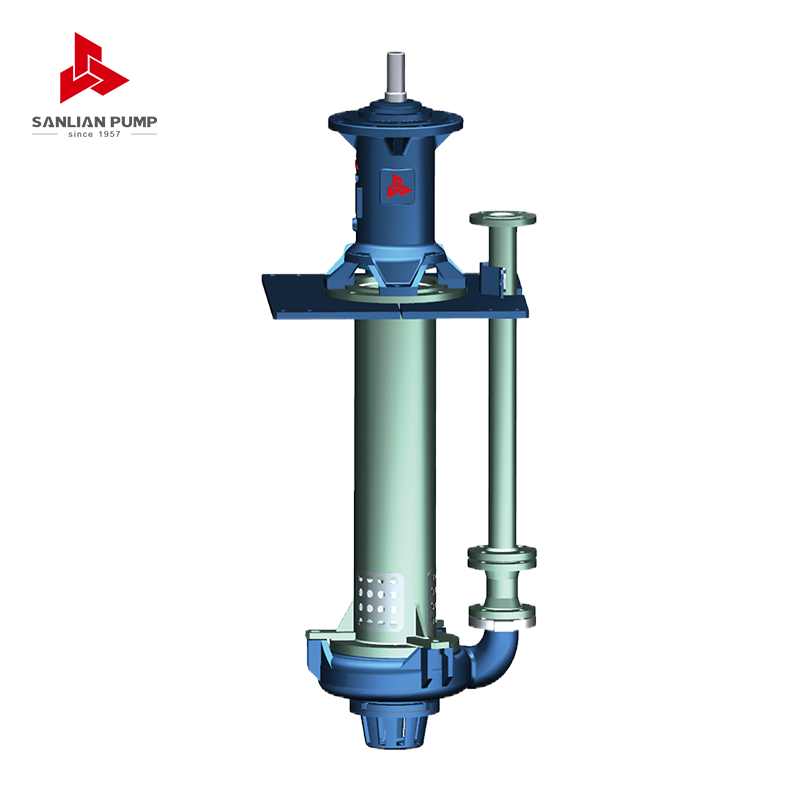
In demanding industrial environments—mining operations, construction dewatering, dredging projects, and wastewater treatment—conventional pumps frequently fail to deliver consistent performance. Traditional centrifugal or surface-mounted slurry pumps require careful priming before startup and depend heavily on sufficient suction head to move abrasive, particle-laden fluids. The SP Submersible Slurry Pump was engineered specifically to overcome these limitations. By submerging the entire pump unit directly into the slurry, it eliminates the need for external priming systems and operates reliably even when suction conditions are far from ideal.
This fundamental design difference translates into real operational advantages: faster startup times, reduced equipment complexity, lower labor costs, and the ability to handle applications that would stall or damage a conventional pump. Understanding exactly how the SP series achieves this—and where it performs best—helps engineers and site managers make smarter equipment decisions.
The Science Behind Priming-Free Operation
Priming is the process of filling a pump and its suction line with liquid before startup, expelling any trapped air so that the impeller can generate the pressure differential needed to move fluid. For surface-mounted pumps, this is a non-negotiable step—an air-locked impeller simply spins without creating useful flow, and prolonged dry running destroys mechanical seals and bearings within minutes.
SP Submersible Slurry Pumps sidestep this problem entirely through their submerged configuration. Because the motor, mechanical seal, and impeller assembly are all positioned below the liquid surface, the pump casing is always filled with slurry at the moment of startup. There is no suction pipe extending above the fluid level to trap air, and no separate priming chamber or vacuum pump is required. The moment power is applied, the impeller begins moving fluid immediately, without any preparatory steps from the operator.
This architecture also means the pump can restart automatically after a power interruption—a critical advantage in remote mining sites or automated processing plants where manual re-priming after every outage would be impractical and costly.
How Insufficient Suction Is Overcome
Suction head—the vertical distance between the pump inlet and the liquid surface—directly affects a pump's ability to draw fluid into its casing. When suction is insufficient, conventional pumps experience cavitation: vapor bubbles form inside the impeller channels, collapse violently, and erode metal surfaces at an accelerated rate. Over time, cavitation damages impellers, reduces flow efficiency, and leads to premature failure.
Submersible slurry pumps resolve this challenge structurally. Because the inlet sits within or at the bottom of the slurry body, the hydrostatic pressure at the pump inlet is always positive—the fluid is being pushed into the impeller by the weight of liquid above it, rather than being pulled by atmospheric pressure through a long suction line. This means the net positive suction head available (NPSHa) at the pump inlet is consistently higher than for surface-mounted equivalents, even in shallow sumps or near-empty tanks.
Key Factors That Enable Low-Suction Performance
- Inlet positioned at or near the lowest point of the sump, maximizing available hydrostatic head
- Large-diameter, recessed impeller designs that reduce inlet velocity and minimize suction losses
- Short internal flow paths between the inlet and impeller eye, minimizing friction losses
- Robust wear-resistant materials (high-chrome alloy or elastomeric liners) that maintain dimensional tolerances even after prolonged abrasive exposure
- Agitator attachments available on many SP models to re-suspend settled solids and maintain pumpable slurry consistency near the inlet
Core Technical Specifications and Performance Range
SP Submersible Slurry Pumps are available across a wide performance range to suit applications from small-scale site dewatering to large continuous mining operations. The table below outlines typical specification ranges found across the SP product family:
| Parameter |
Typical Range |
| Flow Rate |
10 – 4,500 m³/h |
| Total Head |
5 – 80 m |
| Motor Power |
2.2 – 500 kW |
| Maximum Solids Concentration |
Up to 70% by weight |
| Maximum Particle Size |
Up to 76 mm (depending on model) |
| Slurry Density Handling |
Up to 1.35 t/m³ |
| Minimum Submergence Required |
As low as 300 mm |
The minimum submergence requirement of as little as 300 mm is particularly significant: it means the pump continues to deliver rated performance even when the sump or pit is nearly emptied, making it ideal for final-stage dewatering where other pump types would have already been shut down.
Primary Applications Where These Advantages Matter Most
The priming-free, low-suction capabilities of SP Submersible Slurry Pumps make them the preferred choice across several demanding industries:
Mining and Mineral Processing
Open-pit mines, underground sumps, and tailings ponds all present variable and often unpredictable liquid levels. Conventional pumps positioned at the surface require frequent repositioning as pit levels change. SP submersible units can be lowered directly into the sump on cables or pontoons, automatically adapting to changing levels without operator intervention. Their ability to handle high-density slurries with coarse particles makes them indispensable for transporting ore concentrates, tailings, and pit dewatering fluids.
Construction Site Dewatering
Excavation pits fill with groundwater mixed with sand, gravel, and concrete fines—a slurry that quickly damages standard clear-water dewatering pumps. SP models tolerate these abrasive conditions and can be dropped directly into the excavation without any suction piping infrastructure. When heavy rain suddenly floods a site overnight, the pumps restart automatically, removing accumulated slurry before work crews arrive in the morning.
Dredging and Waterway Maintenance
Dredging operations require pumps to handle extremely dense sediment slurries at varying depths. The submersible configuration allows direct placement at the dredge face, minimizing the suction distance between the sediment source and the pump inlet. This dramatically improves efficiency compared to surface-mounted dredge pumps that must overcome substantial suction lift to raise material from the riverbed or harbor floor.
Industrial Wastewater and Process Sludge
Treatment plants, paper mills, food processing facilities, and chemical plants all generate sludge that settles rapidly and clogs conventional pump inlets. SP units equipped with agitator impellers re-suspend settled material before it reaches the pump inlet, maintaining consistent flow even when the sump has been idle for extended periods. No operator needs to manually stir the sump or prime the pump before restarting.
Wear Protection and Long Service Life
Operating inside abrasive slurry around the clock places extreme demands on pump materials. SP Submersible Slurry Pumps address this through careful material selection and modular component design:
- High-chrome white iron (28% Cr): Used for impellers and volute liners in highly abrasive mineral slurries. Offers excellent resistance to abrasion while maintaining dimensional stability under high-pressure operation.
- Natural or synthetic rubber liners: Preferred for slurries with fine, sharp particles or mildly corrosive chemistry. Rubber's elasticity absorbs particle impact energy rather than fracturing, extending liner life in fine-ore and sand-slurry applications.
- Duplex stainless steel options: Available for chemically aggressive slurries where both corrosion and abrasion must be managed simultaneously, such as phosphoric acid slurries or seawater dredging applications.
- Cartridge-style mechanical seals: Allow seal replacement without full pump disassembly, reducing planned maintenance downtime significantly. Some configurations incorporate a pressurized seal water flush system to keep abrasive particles away from the seal faces.
Modular wet-end components—impellers, volute liners, and suction covers—can be swapped individually as wear occurs, without replacing the entire pump body or motor. This approach reduces lifecycle cost considerably compared to non-modular competitors.
Installation, Monitoring, and Maintenance Best Practices
Even a well-designed pump delivers poor results if installed or maintained incorrectly. Following these operational guidelines ensures the SP unit delivers full performance throughout its service life:
- Always maintain minimum submergence depth as specified in the pump's documentation; running the unit with the inlet exposed to air even briefly can cause cavitation and overheating of the motor cooling jacket.
- Use a lifting chain or stainless steel cable rated to at least 3× the pump's wet weight for safe lowering and retrieval from sumps.
- Install motor protection relays calibrated to the motor's full-load amperage; slurry density fluctuations can cause brief overload conditions that cumulatively damage motor windings if unprotected.
- Monitor discharge pressure and flow rate continuously where possible; a gradual decline in discharge pressure at constant speed indicates impeller wear and signals when maintenance is due before catastrophic failure occurs.
- Inspect and replace mechanical seal assemblies at scheduled intervals—do not wait for visible leakage, as slurry ingress into the motor cavity causes irreversible winding damage.
- When the pump will be idle for more than 24 hours, retrieve it from the sump and flush internal passages with clean water to prevent solids from hardening inside the casing and locking the impeller.
Selecting the Right SP Model for Your Application
Choosing the correct SP Submersible Slurry Pump begins with a thorough characterization of the slurry to be handled. The four critical parameters are: solids concentration (percent by weight or volume), particle size distribution and shape (rounded vs. angular), slurry specific gravity, and the required flow rate and total discharge head. With these values confirmed, the system curve can be plotted against the pump's performance curve to identify the correct impeller diameter and motor power combination.
For applications involving variable slurry density—common in mining pit sumps where rainfall dilutes the process slurry unpredictably—variable frequency drive (VFD) control of the motor allows flow rate and power consumption to be adjusted dynamically, preventing overload during peak density events and reducing energy consumption during lighter-duty periods. This combination of robust submersible design and modern drive technology delivers the most flexible and cost-effective solution available for difficult slurry handling challenges.



 English
 中文简体
中文简体 Français
 Español
 Português
 عربى
عربى

 皖公网安备34052302341647号