Centrifugal slurry pumps are the workhorse of mining, mineral processing, dredging, and industrial slurry transfer — but their performance and service life depend critically on three things: correct suction piping design, appropriate pump selection for the slurry duty, and disciplined maintenance and repair practice. Poor suction piping causes cavitation, air entrainment, and accelerated wear that no amount of pump quality can overcome. Submersible slurry pump repair, when done systematically, can restore a unit to near-new performance at a fraction of replacement cost. This article covers all three topics in practical, engineering-level detail.
Centrifugal Slurry Pumps: How They Work and Why They Differ from Water Pumps
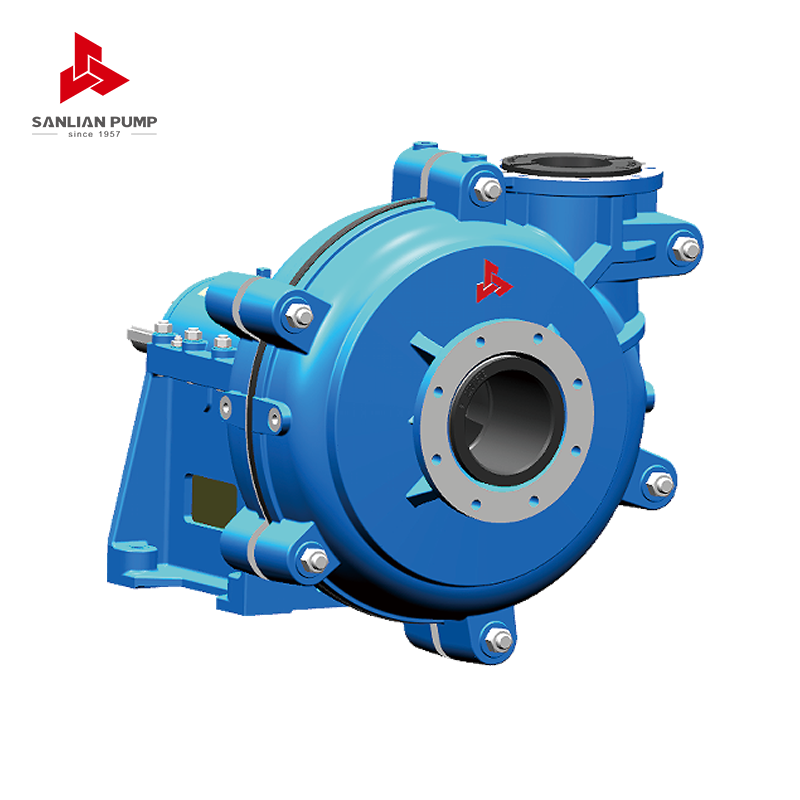
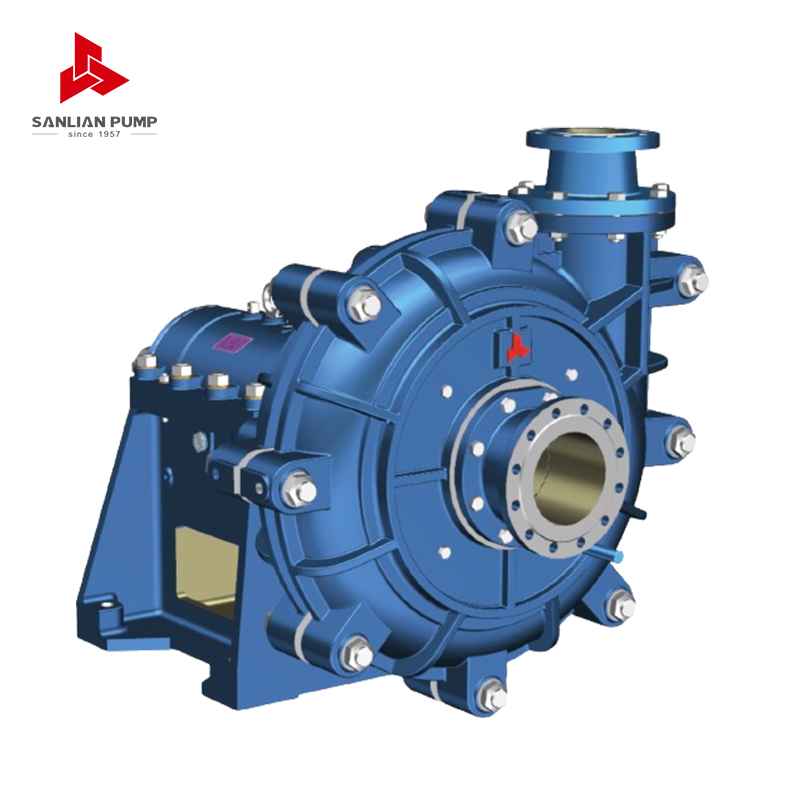
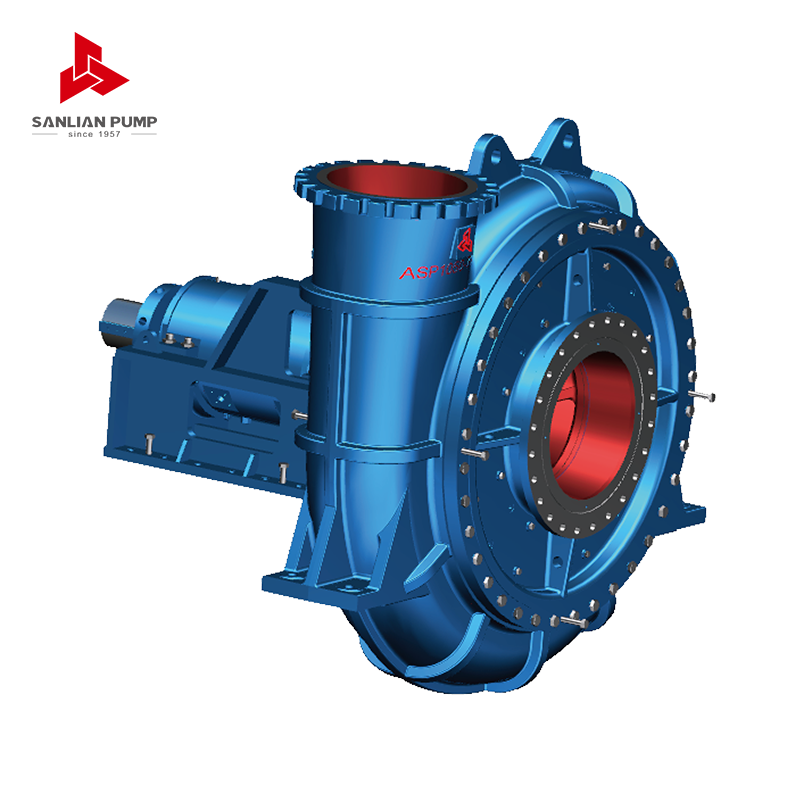
A centrifugal slurry pump operates on the same fundamental hydraulic principle as a clean-water centrifugal pump — rotating impeller vanes impart kinetic energy to the fluid, which is converted to pressure in the volute casing. However, slurry duty introduces abrasive solids, higher density fluids, and often corrosive chemistry that require fundamental design differences from standard water pumps.
Design Features Specific to Slurry Service
- Heavy wall thickness: Slurry pump casings and impellers are significantly thicker than water pump equivalents — typically 2–4× the wall thickness — to provide a wear allowance before hydraulic performance degrades below acceptable limits.
- Wide-passage impeller: Vane passages are wider than equivalent water pump impellers to allow solid particles to pass without plugging. Minimum passage width is typically sized to pass the largest expected particle — often 50–80% of the maximum particle size in the feed.
- Wear-resistant materials: Wet-end components (impeller, casing, side liners) are made from high-chrome white iron (typically 25–28% Cr, 550–700 HB) for abrasive duties, or natural rubber/polyurethane liners for fine, high-velocity slurries where rubber outperforms metal.
- Expeller or gland seal: Slurry pumps use either a centrifugal expeller (a secondary impeller that creates a pressure barrier preventing slurry from reaching the shaft seal) or a packed gland/mechanical seal with flush water to protect shaft sealing from abrasive intrusion.
- Low operating speed: Slurry pumps run at lower tip speeds than water pumps — typically peripheral impeller tip speeds of 15–25 m/s versus 30–50 m/s for water pumps — because wear rate increases roughly with the cube of velocity (Erosion ∝ V³). Reducing speed by 20% cuts wear rate by approximately 50%.
Key Performance Parameters for Slurry Duty
Slurry pump performance differs from clean-water pump curves in ways that must be accounted for in system design:
- Head ratio (HR): The head generated by a pump on slurry is lower than on water at the same flow and speed. HR = H_slurry / H_water, typically 0.85–0.95 for fine slurries and dropping to 0.70–0.80 for coarse, dense slurries. System TDH calculations must account for this derating.
- Efficiency ratio (ER): Similarly, pump efficiency on slurry is derated — ER = η_slurry / η_water, typically 0.85–0.95 for low-concentration fine slurries.
- Slurry specific gravity (S_m): The mixture density must be used for power and NPSH calculations. For a 30% solids-by-weight slurry with solids SG of 2.7, S_m ≈ 1.28 — power demand increases proportionally with mixture density.
- Critical flow velocity: Slurry pipelines must maintain flow velocity above the deposition velocity (V_c) — the minimum velocity at which solids remain in suspension. Below V_c, solids settle and plug the pipeline. For coarse slurries in horizontal pipes, V_c is typically 1.5–3.5 m/s depending on particle size, density, and pipe diameter.
Horizontal vs. Vertical Slurry Pump Configurations
Table 1: Horizontal vs. vertical centrifugal slurry pump configuration comparison
| Feature |
Horizontal Centrifugal Slurry Pump |
Vertical Centrifugal Slurry Pump (Sump) |
| Installation |
Above-ground on baseplate; requires suction pipe to sump |
Submerged in sump; motor above liquid level |
| Suction piping |
Critical — must be designed carefully (see below) |
Minimal; impeller draws directly from sump |
| Priming |
Required; can lose prime if suction design is poor |
Self-priming by design; no prime loss risk |
| Maintenance access |
Excellent; full access above-ground |
Pump must be lifted from sump for wet-end work |
| Solids handling |
Coarse and dense slurries; high-head duties |
Moderate solids concentration; sump drawdown |
| Typical applications |
Mill discharge, tailings transfer, pipeline pumping |
Sump drainage, cyclone feed, process sumps |
Slurry Pump Suction Piping: Design Principles That Determine Pump Life
Suction piping is the most frequently misdesigned element in slurry pump installations — and poor suction design is the single most common cause of premature pump failure, cavitation, and erratic performance. Unlike discharge piping where pressure is positive and errors are more forgiving, suction conditions operate below atmospheric pressure and have almost zero tolerance for poor design.
NPSH: The Governing Parameter for Suction Design
Net Positive Suction Head (NPSH) is the absolute pressure available at the pump suction flange above the vapor pressure of the liquid. When available NPSH (NPSHa) drops below the pump's required NPSH (NPSHr), the liquid partially vaporizes inside the impeller — causing cavitation, which manifests as noise, vibration, impeller pitting, and dramatically accelerated wear.
The minimum design margin recommended is NPSHa ≥ NPSHr + 1.0 m for clean water, and NPSHa ≥ NPSHr + 2.0–3.0 m for slurry duties where the consequences of cavitation include both hydraulic damage and abrasive wear from solid particle impact on cavitation-damaged surfaces. Every meter of unnecessary suction head loss directly reduces NPSHa and moves the operating point closer to the cavitation threshold.
Pipe Diameter: The Most Important Suction Decision
Suction pipe velocity should be maintained between 1.5 and 3.0 m/s for slurry service. Below 1.5 m/s, solids settle in the suction line, causing slug loading, blockages, and pump surge. Above 3.0 m/s, friction losses increase rapidly (friction head ∝ V²), eroding the NPSHa margin and causing accelerated wear in the suction pipe itself.
For a practical example: a pump handling 150 m³/h slurry flow requires a suction pipe area of 150/(3600 × 2.5) = 0.0167 m², corresponding to a pipe internal diameter of approximately 146 mm. Select the next standard pipe size up — DN150 (6-inch) nominal — which gives a velocity of approximately 2.4 m/s, comfortably within the recommended range.
The suction pipe should be at least one nominal pipe size larger than the pump suction flange to reduce velocity and friction losses on the approach. A reducing eccentric transition (flat side up) connects the suction pipe to the pump flange.
Suction Pipe Length and Routing Rules
Every meter of suction pipe, every bend, and every fitting adds friction loss that reduces NPSHa. Key routing rules for slurry pump suction piping:
- Keep suction lines as short as possible. A suction line longer than 5–8 pipe diameters introduces significant friction loss. Where possible, position the pump as close to the sump as the mechanical installation allows.
- Minimize bends and fittings. Each 90° elbow in a slurry suction line adds the equivalent of 10–30 pipe diameters of friction loss. Use long-radius elbows (R/D ≥ 5) rather than standard elbows; replace tees with Y-entries where flow direction changes are required.
- No high points in the suction line. Any rise in the suction pipe above the pump centerline creates a gas pocket that accumulates over time, eventually breaking the prime. Suction lines must slope continuously downward from the sump to the pump with no U-bends or rises.
- Eccentric reducer, flat side up. Where the suction pipe reduces to match the pump suction flange, use an eccentric reducer installed with the flat side on top. A concentric reducer or a flat-side-down eccentric reducer creates an air trap at the top of the transition — a guaranteed source of air entrainment and prime loss.
- Straight run before the pump. Provide a straight suction pipe run of at least 5–8 pipe diameters immediately upstream of the pump suction flange to allow the velocity profile to stabilize before entering the impeller eye. Turbulent, swirling, or asymmetric flow entering the impeller causes uneven wear, vibration, and reduced hydraulic performance.
- Avoid suction valves where possible. If a suction isolation valve is required, use a full-bore gate valve or knife gate valve — never a butterfly valve or globe valve, which both introduce significant obstruction and turbulence directly upstream of the pump.
Sump Design and Its Effect on Suction Performance
The sump feeding the slurry pump is part of the suction system. Common sump design errors that cause pump problems:
- Insufficient submergence: The suction pipe bell or inlet must be submerged to a depth of at least 2–3 pipe diameters below the minimum operating liquid level. Insufficient submergence creates a surface vortex (air funnel) that draws air directly into the suction pipe, causing severe pump surging and air entrainment.
- Suction pipe positioned against a sump wall: Placing the suction bell within one pipe diameter of a sump wall or floor causes asymmetric flow into the inlet, promoting sub-surface vortices. Minimum clearance from sump walls and floor should be 0.5–1.0 × pipe diameter.
- Oversized sump with low velocity: Sumps that are too large allow solids to settle before reaching the suction inlet, causing progressive sump floor buildup and eventual inlet blockage. Sump cross-section should be sized so that the horizontal flow velocity toward the suction inlet is at least 0.3–0.5 m/s to maintain solids in suspension.
- Feed pipe discharging directly above the suction: If the slurry feed entering the sump discharges directly above or near the pump suction inlet, the turbulence and entrained air from the falling stream is drawn directly into the pump. Baffles, feed below liquid level, or physical separation between the feed entry point and suction location mitigate this.
Friction Loss Calculation for Slurry Suction Piping
Suction line friction losses must be calculated to confirm adequate NPSHa. The Darcy-Weisbach equation gives friction head per unit length:
h_f = f × (L/D) × (V²/2g)
Where f is the Darcy friction factor (typically 0.02–0.025 for turbulent slurry flow in new steel pipe), L is pipe length (m), D is internal diameter (m), V is flow velocity (m/s), and g is 9.81 m/s². Fitting losses are added as equivalent pipe lengths using standard K-factor tables. For slurry, add a 20–30% safety margin to the calculated clean-water friction loss to account for the higher effective viscosity and non-Newtonian behavior of many slurries.
Common Suction Piping Problems and Their Diagnosis
Field diagnosis of suction-related problems is straightforward when symptoms are matched to root causes. The following table covers the most common suction piping faults encountered in operating slurry pump installations.
Table 2: Slurry pump suction problems — symptoms, root causes, and corrective actions
| Symptom |
Most Likely Root Cause |
Corrective Action |
| Pump surges, flow fluctuates rhythmically |
Air entrainment from insufficient submergence or surface vortex |
Raise sump level; add anti-vortex baffles; deepen suction bell |
| Rattling, crackling noise from pump casing |
Cavitation due to insufficient NPSHa |
Reduce suction losses; lower pump elevation; increase suction pipe diameter |
| Pump loses prime on startup |
Air pocket in suction line high point; air leak at flange or fitting |
Re-route to eliminate high points; check and re-seal all suction flanges |
| Reduced flow and head at normal speed |
Partial blockage of suction line or inlet; excessive suction friction losses |
Inspect and clear suction; measure suction pressure; review pipe sizing |
| Excessive impeller wear on suction side |
Cavitation erosion combined with abrasive wear |
Improve NPSHa margin; review slurry particle size vs. impeller material selection |
| Vibration and bearing overload |
Asymmetric flow into impeller from swirl or inadequate straight run |
Add 5–8D straight pipe before pump; reposition or reorient upstream elbow |
Submersible Pump Repair: Systematic Approach to Wet-End and Motor Overhaul
Submersible slurry pumps — where the motor and pump are combined in a sealed unit submerged in the sump — eliminate suction piping entirely but introduce their own maintenance requirements. A well-executed submersible pump repair can restore a unit to 90–95% of new performance at 30–50% of replacement cost, making systematic repair the preferred option in most commercial operations.
When to Repair vs. Replace a Submersible Slurry Pump
The repair-or-replace decision depends on the condition of both the wet end (hydraulic components) and the motor. General guidance:
- Repair is cost-effective when: wet-end wear is within the allowable range (impeller and casing walls have consumed less than 60–70% of original wall thickness); motor winding insulation resistance is above 1 MΩ; shaft and bearing housing show no fatigue cracking; and the pump frame/column has no structural corrosion.
- Replacement is preferred when: motor stator winding is burnt (insulation resistance below 100 kΩ); rotor is cracked or has severe rubbing damage; impeller passage wall has worn through to base metal; or the pump has suffered a catastrophic mechanical failure (shaft fracture, housing crack) that compromises structural integrity.
Step-by-Step Submersible Pump Repair Procedure
- Safe extraction and initial assessment. Lift the pump from the sump using the correct lifting gear — never by the power cable. Record the operating history: hours run since last service, observed symptoms (reduced flow, increased current draw, vibration, motor trip). Photograph all components before disassembly.
- Electrical testing before disassembly. Measure and record insulation resistance (IR) between each winding phase and earth using a 500V megohmmeter. Values above 100 MΩ indicate excellent winding condition; 1–100 MΩ is acceptable; below 1 MΩ warrants investigation; below 100 kΩ indicates moisture ingress or insulation breakdown requiring rewinding. Record winding resistance on each phase — imbalance greater than 5% between phases indicates a developing winding fault.
- Wet-end disassembly. Remove the impeller (note: slurry pump impellers are typically right-hand threaded — rotate clockwise to remove). Inspect the impeller vane passages, front shroud, and hub for wear. Measure remaining wall thickness using ultrasonic testing or calipers and compare to the manufacturer's minimum wear limit — typically 50–60% of original wall thickness. Remove and inspect volute casing and side liners.
- Mechanical seal or gland inspection. For submersible pumps, the shaft seal system — typically a double mechanical seal arrangement with an oil-filled seal chamber between the wet end and motor — must be thoroughly inspected. Check seal faces for grooves, chips, or scoring. Replace all elastomers (O-rings, lip seals) regardless of apparent condition. Drain and inspect the seal oil for water content (milky appearance indicates water ingress past the lower seal) and metallic particles.
- Bearing inspection and replacement. Disassemble the bearing assembly. Inspect both bearings for pitting, spalling, cage damage, and race discoloration (blue/black indicates overheating). Replace all bearings regardless of apparent condition during a major overhaul — bearing replacement cost is trivial compared to the cost of a repeat pump extraction due to premature bearing failure. Clean and inspect the bearing housing for wear at the bearing seat diameters.
- Shaft inspection. Clean and measure the shaft diameter at all critical locations: seal journal, impeller taper or thread, and bearing seats. Maximum allowable wear at seal journals is typically 0.1–0.15 mm below nominal diameter. Check shaft runout at the impeller location using a dial indicator — maximum acceptable runout is typically 0.05–0.10 mm TIR. Shafts with grooves at seal locations should be built up by metallizing or hard chrome plating and re-ground, or replaced.
- Motor stator inspection and rewinding (if required). Visually inspect the stator winding for burnt coils (black carbonized insulation), coil displacement, or physical damage from rotor contact. If rewinding is required, strip the stator to bare laminations, install new winding using the original winding data (number of turns, wire gauge, connection), apply class F or H varnish and oven cure, then retest IR. A rewound motor should achieve IR >100 MΩ before reassembly.
- Reassembly with new wear parts. Install new impeller, liners, seals, and bearings. Torque all fasteners to specification. Set impeller running clearance to manufacturer's specification — typically 0.5–2.0 mm between impeller front face and suction plate depending on pump size. Too tight risks metal contact; too loose allows recirculation that reduces efficiency and accelerates wear.
- Pre-service testing. Before reinstalling in the sump, perform a dry run insulation resistance test (should be identical to post-winding value), verify correct rotation direction by briefly energizing and observing impeller, and pressure-test the seal chamber at 1.5× maximum operating pressure to verify seal integrity. Record all measurements in the pump service history.
Submersible Pump Wear Life and Maintenance Intervals
Wear life of submersible slurry pump wet-end components depends heavily on slurry abrasivity and particle size. Practical field experience across typical applications:
Table 3: Typical submersible slurry pump component wear life by duty severity
| Duty Description |
Impeller Life |
Liner/Casing Life |
Bearing Life |
Seal Service Interval |
| Light duty (fine tailings, <10% solids) |
12–24 months |
18–36 months |
12–18 months |
12–18 months |
| Medium duty (process slurry, 20–35% solids) |
6–12 months |
8–16 months |
8–12 months |
6–12 months |
| Heavy duty (coarse mill discharge, >40% solids) |
2–5 months |
3–8 months |
4–8 months |
3–6 months |
| Severe duty (dredging, sand/gravel) |
4–10 weeks |
6–16 weeks |
3–6 months |
6–12 weeks |
Extending Submersible Pump Life Between Overhauls
Several operational and maintenance practices measurably extend the interval between submersible pump overhauls:
- Maintain correct sump level: Operating below minimum submergence draws air into the pump, dramatically accelerating impeller and casing wear through cavitation-erosion. Install level switches to alarm or trip the pump before minimum submergence is breached.
- Avoid dry running: Even brief dry-running destroys mechanical seals and can seize bearings. Submersible pumps should have motor temperature protection and dry-run protection relays as standard.
- Monitor motor current: Rising current at constant head and flow indicates increasing internal wear (clearances opening up, recirculation increasing). A 10–15% current increase from baseline at the same duty point is a reliable early indicator that wet-end wear is approaching replacement limits.
- Regular seal oil condition checks: Where access allows, periodically drain and inspect the seal oil chamber. Milky, water-contaminated oil confirms lower seal failure — catching this early allows planned seal replacement before water ingress reaches the motor and causes winding failure.
- Match pump speed to duty: If the pump is oversized and operating significantly to the left of the best efficiency point (BEP), recirculation within the impeller accelerates wear disproportionately. Fit a variable speed drive (VSD) or reduce impeller diameter to match the actual system duty more closely.
Material Selection for Slurry Pump Wet-End Components
Selecting the correct wet-end material — for both new pump selection and replacement part specification during repair — is one of the highest-impact decisions in slurry pump operation. The wrong material can reduce component life by a factor of 3–10× compared to the optimal choice for the specific slurry.
Table 4: Slurry pump wet-end material selection guide by slurry type and particle characteristics
| Slurry Type |
Particle Size |
Recommended Impeller Material |
Recommended Liner Material |
Reason |
| Coarse sand/gravel |
>5 mm |
High-chrome white iron (28% Cr) |
High-chrome white iron |
High impact + abrasion; metal superior to rubber |
| Fine mineral tailings |
<1 mm |
Natural rubber (NR) or polyurethane |
Natural rubber |
Fine particles cause erosion; rubber absorbs impact better than metal at low velocity |
| Acidic slurry (pH < 4) |
Fine–medium |
High-alloy stainless (CD4MCu) or rubber |
Rubber or high-alloy stainless |
Acid attacks chrome iron binder; corrosion-resistant alloy or rubber required |
| Mill discharge (ore grinding) |
Mixed coarse + fine |
High-chrome white iron (25% Cr) |
High-chrome white iron or polyurethane |
Mixed particle size requires metal hardness; coarse particles damage rubber |
| High-temperature slurry (>60°C) |
Any |
High-chrome white iron or hard-faced steel |
High-chrome white iron |
Natural rubber softens above 60°C; only metal suitable |



 English
 中文简体
中文简体 Français
 Español
 Português
 عربى
عربى

 皖公网安备34052302341647号