Material Options and Corrosion Resistance in Mixed Flow Pumps
This article focuses on practical material selection and corrosion-resistance strategies for mixed flow pumps used across freshwater, seawater, wastewater, and industrial process services. It covers common metallurgy and non-metallic materials, coatings and surface treatments, design and installation practices that reduce corrosion risk, inspection and monitoring methods, and clear recommendations by application. The goal is to give engineers and maintenance teams actionable guidance—not broad theory—so they can choose and protect pump components for long service life.
Common Materials for Pump Casings, Impellers and Shafts
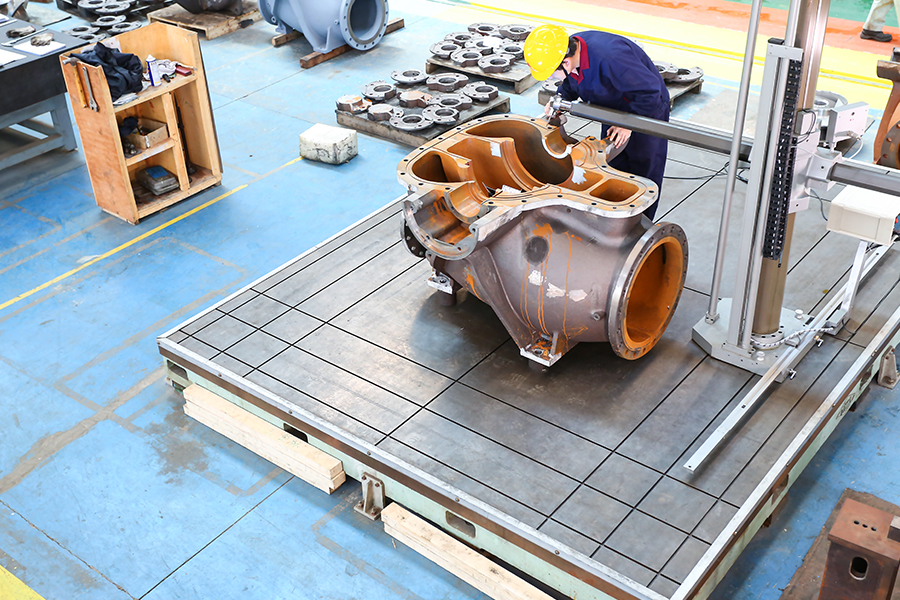
Selecting materials begins with the three primary pump components: casing, impeller, and shaft. Each has different mechanical and corrosion demands: casings need wear and impact resistance, impellers require good hydraulic stability and erosion-corrosion resistance, and shafts demand high tensile strength and fatigue resistance. Below are the practical material options and where they fit best.
Cast Iron and Ductile Iron
Cast iron and ductile (nodular) iron are common for freshwater and mildly corrosive fluids due to low cost and good mechanical strength. They are not suitable for chloride-rich environments (seawater/brine) without protective coatings or liners because they suffer general corrosion and pitting. Use with sacrificial corrosion allowance or coatings when cost constraints drive their selection.
Bronze and Copper Alloys (Bronze, Ni-Al Bronze)
Bronze and naval bronzes (including nickel-aluminium bronze) offer good seawater resistance, low biofouling tendency, and favorable erosion-corrosion behavior for impellers and wear rings. They are commonly used for seawater intake and coastal installations. Consider cathodic compatibility with other metals to avoid galvanic corrosion.
Stainless Steels (304, 316, 316L, Duplex)
Austenitic stainless steels such as 316/316L and duplex stainless steels provide superior resistance to pitting and crevice corrosion compared with 304, especially in chloride-bearing waters. Duplex and super-duplex grades deliver higher strength and better resistance to chloride stress corrosion cracking—use these for pressurized, high-chloride, or high-strength shaft and impeller requirements.
High-Nickel and Titanium Alloys
For highly aggressive seawater, brine, or chemical process fluids, high-nickel alloys (e.g., Hastelloy) and titanium offer excellent corrosion resistance. These are costlier but necessary where chloride-induced corrosion, erosion-corrosion, or chemical attack is severe—typical in desalination, chemical dosing, and offshore critical pumps.
Non-metallic Options (Rubber, FRP, Thermoplastics)
Elastomer-lined casings, rubber-coated impellers, fiber-reinforced plastics (FRP), and engineered thermoplastics (e.g., PVDF, PP) are practical where chemical compatibility or abrasion-resistance is required and where metallic corrosion is severe. They are widely used in wastewater, slurry, and some chemical services but have temperature and pressure limits.
Coatings, Linings and Surface Treatments
Surface protection often extends service life more cost-effectively than upgrading to exotic base metals. Choose a protection system based on fluid chemistry, erosion risk, and operating temperature.
Polymeric Coatings and Linings
- Epoxy and novolac linings—good for general corrosion and many industrial chemicals; apply properly with surface preparation to avoid under-film corrosion.
- Polyurethane—excellent abrasion resistance for sand-laden flows and suitable for low-to-moderate chemical exposure.
- Rubber (natural or synthetic) linings—effective for erosion and some corrosives; commonly used inside casings and volutes.
Metallic Sprays and Clads
Thermal spray coatings (HVOF tungsten carbide, chrome-carbide, stainless overlays) and weld cladding provide a hard, erosion-resistant surface with strong adhesion. Use where cavitation or slurry erosion is significant and when base metal corrosion plus mechanical wear are both concerns.
Electrochemical and Galvanic Protection
Sacrificial anodes (zinc, aluminum) or impressed current cathodic protection are used primarily on submerged structures and large seawater systems. For mixed flow pumps exposed to seawater, anode systems protect external wetted parts and reduce galvanic attack when designed and monitored properly.
Design and Installation Practices to Reduce Corrosion
Material selection alone is not enough. Thoughtful hydraulic and mechanical design minimizes corrosion hot spots and extends component life.
Avoid Crevices and Stagnant Zones
Design clearances and joints to avoid crevice corrosion: use butt joints where possible, avoid trapped pockets at flanges or weld toes, and ensure flow through wear rings and balance passages to remove deposits.
Material Pairing and Galvanic Considerations
When dissimilar metals are used in contact, evaluate galvanic series and implement insulating gaskets, sleeves, or coatings to prevent rapid galvanic corrosion—especially between copper alloys and stainless steels in seawater.
Provide Corrosion Allowance and Replaceable Wear Parts
Specify corrosion allowance thickness on casings and shafts where applicable. Design for replaceable wear rings, sleeves, and sacrificial components so that routine wear and local corrosion can be repaired without replacing the entire pump.
Inspection, Monitoring and Testing
A program of inspection and monitoring detects corrosion before catastrophic failure. Use practical, field-proven techniques described below.
Visual and Dimensional Inspections
Schedule regular visual inspections for pitting, blistering of coatings, erosion patterns and seal leakage. Measure wall thickness (ultrasonic) on casings and shafts at intervals based on expected corrosion rates.
Electrochemical and Coupon Testing
Deploy corrosion coupons and electrical resistance probes in representative flow streams to quantify corrosion rates. For new installations, short-term coupon tests help confirm material compatibility before full-scale deployment.
Vibration and Bearing Monitoring
Shaft corrosion and pitting accelerate fatigue and imbalance. Use vibration analysis and shaft run-out checks to catch early signs of material loss affecting rotor dynamics.
Application-Based Material Guidance
Below are concise, actionable recommendations for common service conditions. These are practical starting points; final selection should consider fluid chemistry, temperature, and maintenance capability.
| Service |
Recommended Materials |
Notes / Typical Measures |
| Freshwater (cooling, potable) |
Ductile iron, 304/316 stainless for shafts |
Use coatings for iron in aggressive chemistries; monitor pitting |
| Seawater intake / desalination |
Ni-Al bronze impellers, duplex/super-duplex shafts, titanium for critical parts |
Consider sacrificial anodes, HVOF clads, and non-metallic liners where abrasion occurs |
| Wastewater (abrasive & chemical) |
Rubber-lined casings, high-chrome or HVOF-sprayed internals |
Frequent inspections; replaceable wear parts recommended |
| Abrasive slurry |
High-chrome alloys, tungsten carbide overlays, elastomer-protected impellers |
Erosion-corrosion mitigation is primary design driver |
| High-chloride chemical process |
Hastelloy-type alloys, titanium, or heavily coated duplex steels |
Material cost high; design for monitoring and replaceability |
Practical Selection Checklist for Engineers
- Identify fluid chemistry (chloride concentration, pH, oxygen, suspended solids) and operating temperature.
- Rank failure modes: pitting, crevice, erosion-corrosion, galvanic attack, and abrasion.
- Choose the minimum-cost material that meets required corrosion resistance and mechanical strength—consider duplex stainless or nickel alloys for high-chloride services.
- Specify protective coatings, claddings, or linings where full exotic metallurgy is not economical.
- Design to allow replaceable sacrificial parts, ease of inspection, and non-destructive monitoring points.
- Account for galvanic couples—insulate dissimilar metals and plan cathodic protection if submerged.
Common Failure Modes and Mitigation
Understanding typical failures helps prioritize protections:
- Pitting and crevice corrosion—mitigate by using pitting-resistant materials (316L, duplex) and avoiding stagnant crevices; apply aggressive flushing or scouring flows where possible.
- Erosion-corrosion—mitigate with harder surfacing (HVOF, high-chrome) and limiting particulate velocities through impeller/volute design.
- Galvanic attack—insulate dissimilar-metal contacts and, if immersed, use properly sized sacrificial anodes or impressed current systems.
- Stress corrosion cracking—avoid susceptible grades (304 in chloride services) and prefer duplex or nickel alloys where stress + chlorides are present.
Summary and Recommended Next Steps
Material selection for mixed flow pumps is an exercise in balancing corrosion resistance, mechanical properties, and cost. Begin with fluid analysis and failure-mode ranking, then select base materials and protective systems that address both corrosion and wear. Where budget permits, duplex stainless steels or nickel alloys plus targeted HVOF overlays provide durable performance in demanding chloride or abrasive services. For wastewater and slurry services, prefer lined or elastomer-protected internals and design for easy replacement of wear parts.
Finally, implement a monitoring and inspection program—visual checks, ultrasonic thickness, coupons, and vibration analysis—to verify the chosen materials and coatings are performing as expected and to catch degradation early.


 English
 中文简体
中文简体 Français
 Español
 Português
 عربى
عربى

 皖公网安备34052302341647号