Introduction to Centrifugal Pumps
Centrifugal pumps are widely used in industries for transferring liquids efficiently. Among them, single-stage single-suction (end-suction) pumps and single-stage double-suction (split-case) pumps are two primary configurations that serve different operational needs. Understanding their differences, design characteristics, and ideal applications is crucial for selecting the right pump for a given scenario.
Design Differences
Single-Stage Single-Suction Centrifugal Pumps
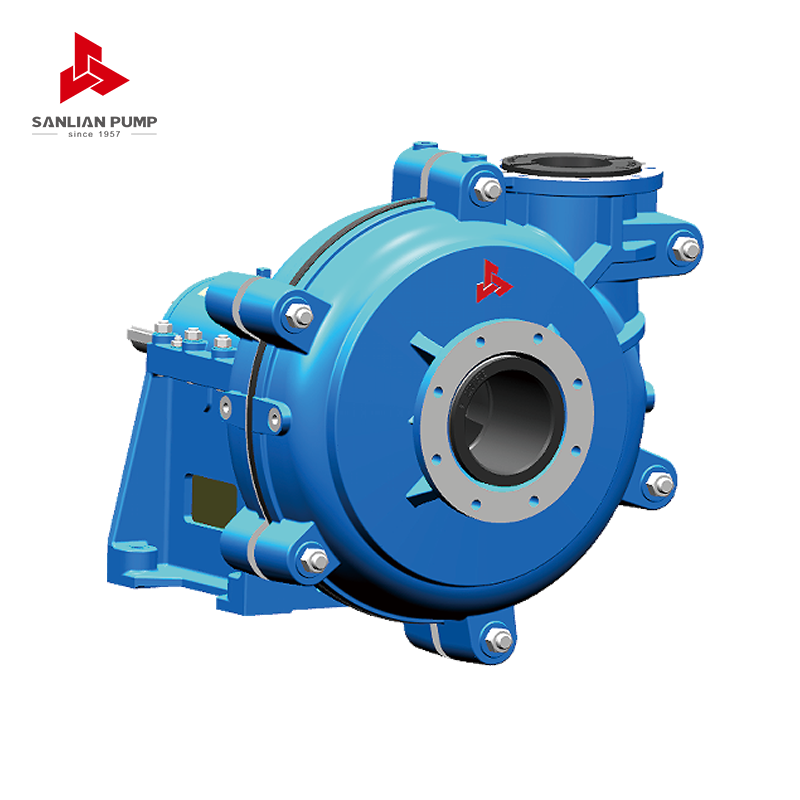
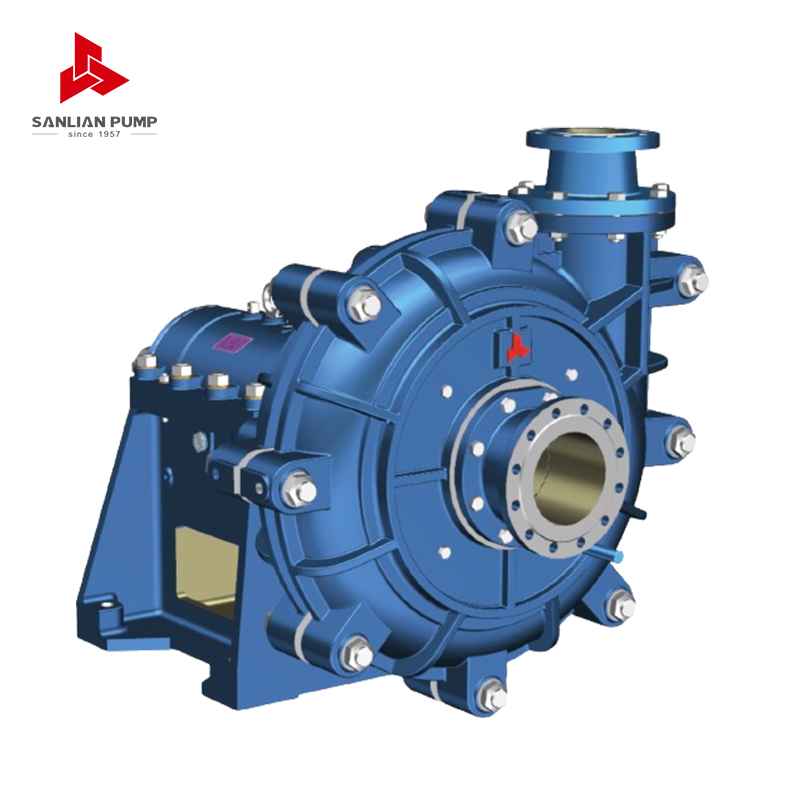
These pumps feature a single impeller that draws fluid from one side only. The design is compact and straightforward, making it easier to install and maintain. End-suction pumps are typically horizontal, with a suction port on one side and discharge on the other.
Single-Stage Double-Suction Centrifugal Pumps
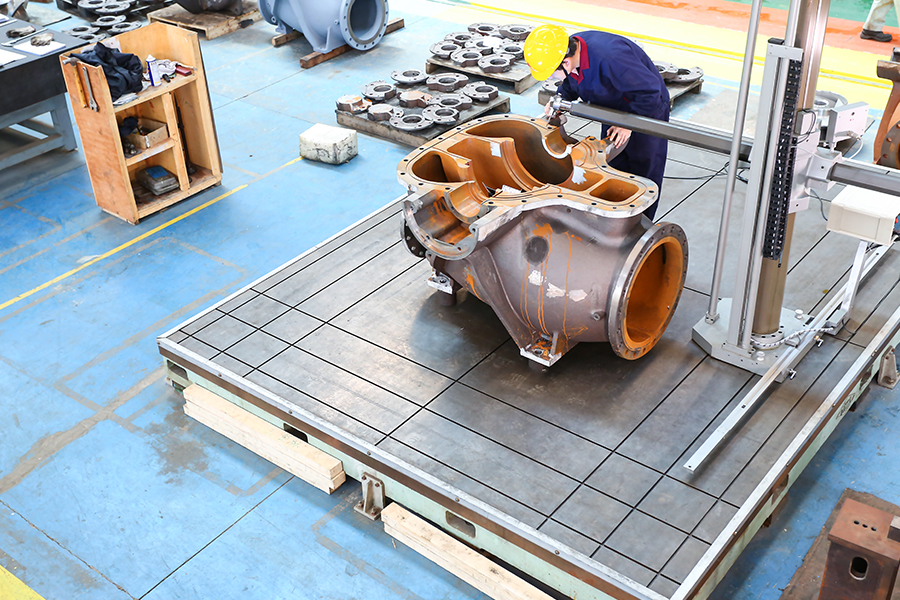
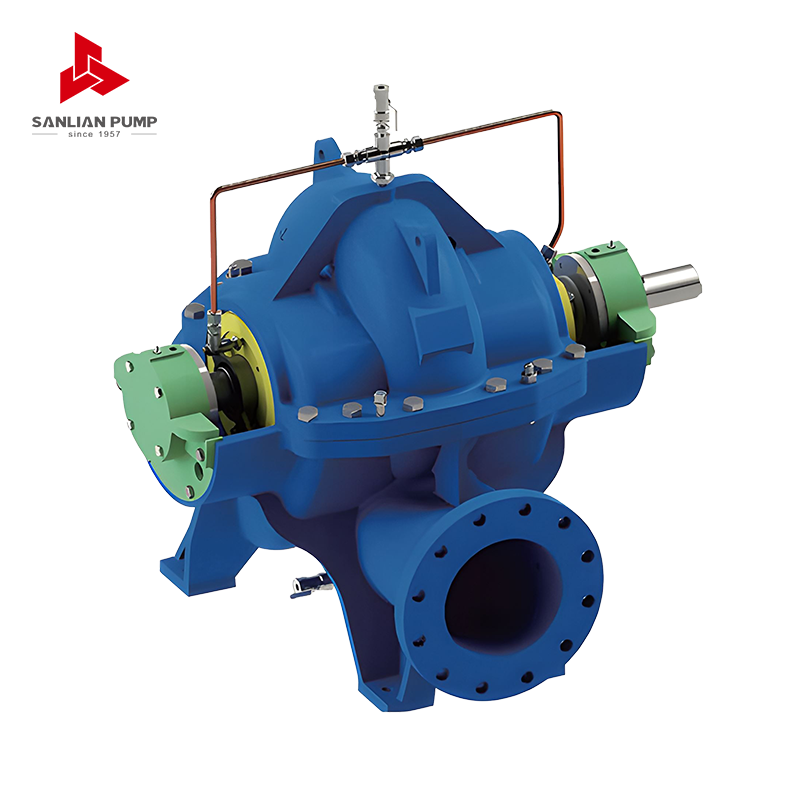
Double-suction pumps have a single impeller as well but draw fluid symmetrically from both sides. This split-case design reduces radial load on the shaft, balances hydraulic forces, and allows higher flow rates without excessive vibration. The casing is larger and usually mounted horizontally with a centerline suction configuration.
Hydraulic Performance Differences
Flow Rate and Head
End-suction pumps are well-suited for moderate flow rates and medium head applications. In contrast, double-suction pumps can handle very high flow rates while maintaining stable hydraulic performance, making them ideal for large-scale water transport.
Efficiency and NPSH
Double-suction pumps typically achieve higher efficiency due to reduced hydraulic losses and balanced forces. They also have better Net Positive Suction Head (NPSH) performance, reducing the risk of cavitation in demanding systems.

Mechanical Considerations
Shaft Load and Bearings
End-suction pumps place more radial load on the shaft and bearings due to unbalanced suction. Double-suction pumps distribute forces evenly across the impeller, which reduces mechanical stress and extends bearing and seal life.
Maintenance and Accessibility
End-suction pumps are easier to maintain because of their compact structure. Split-case pumps require more space but allow in-line maintenance of bearings and seals without disconnecting the pipework, which can be beneficial in large industrial setups.
Application Scenarios
Single-Suction Pump Applications
- Municipal water supply for small to medium systems
- HVAC circulation in commercial buildings
- Irrigation systems with moderate flow rates
- Industrial processes with medium head requirements
Double-Suction Pump Applications
- Large-scale water transmission and treatment plants
- Power generation plants requiring high-capacity cooling water pumps
- Industrial facilities with high flow and low to medium head requirements
- Flood control and municipal pumping stations
Installation and Space Requirements
End-suction pumps are compact and suitable for confined spaces. They can often be installed close to the suction source. Double-suction pumps, however, require larger foundations and more space due to their wider casing and centerline suction design. Adequate space for maintenance access is also a critical consideration.
Cost Considerations
Generally, single-suction pumps have lower upfront costs due to simpler design and smaller size. Double-suction pumps cost more initially but can provide savings in operational efficiency and longevity in large-scale applications, especially where high flow rates are involved.
Comparison Table
| Feature |
Single-Suction Pump |
Double-Suction Pump |
| Flow Rate |
Medium |
High |
| Head Capacity |
Medium |
Medium to High |
| Efficiency |
Moderate |
High |
| Maintenance |
Simple |
Moderate, in-line possible |
| Installation Space |
Compact |
Larger footprint |
| Cost |
Lower |
Higher |
Conclusion
Selecting between a single-stage single-suction and a single-stage double-suction centrifugal pump depends on operational requirements, flow rate, maintenance preference, and budget. End-suction pumps excel in compact, medium-flow applications, while double-suction pumps are indispensable for high-capacity, large-scale systems where efficiency, longevity, and reduced mechanical stress are critical.



 English
 中文简体
中文简体 Français
 Español
 Português
 عربى
عربى

 皖公网安备34052302341647号