Why Motor Seals Are the Weakest Link in Submersible Pumps
The motor seal is the only barrier standing between the pumped liquid and the dry, sensitive interior of a submersible motor. Once that barrier is compromised, moisture and contaminants migrate into the stator windings, and what looks like an electrical fault is almost always the downstream result of a seal that failed weeks or months earlier. Reliability studies across water, wastewater, and industrial pumping operations consistently show that seal-related issues are responsible for a large share of unplanned submersible pump downtime, far more than bearing wear or winding defects on their own. Understanding why seals fail is the first step toward avoiding the expensive cycle of pulling a pump, rewinding a motor, and reinstalling equipment that should have lasted years longer.
Abrasive Wear From Sand, Grit, and Solids
Submersible pumps rarely handle perfectly clean liquid. Wastewater carries grit, borewells produce sand, and industrial slurries contain suspended particles that behave like sandpaper against the seal faces. Every rotation of the shaft drags these particles across the mating surfaces, and over time the once-flat, polished faces develop grooves and pitting. Once the faces lose their flatness, the thin lubricating film that keeps them running smoothly can no longer form properly, and leakage begins.
Signs of Abrasive Damage
- Visible scoring or scratch marks on seal faces during teardown inspection
- Gradual increase in oil or barrier fluid contamination between service intervals
- Uneven wear pattern rather than a uniform ring across the face
Hard-face seal materials such as silicon carbide or tungsten carbide resist this kind of wear far better than softer carbon-ceramic combinations, and pairing them with a flushed or vented seal chamber helps keep particles from settling directly on the sealing surface.
Overheating and Dry-Running Damage
Mechanical seals depend on a thin film of liquid to lubricate and cool the sliding faces. When a pump runs with an air pocket around the seal, or continues operating after the sump or well has drawn down, that film disappears. Without it, friction at the seal faces generates heat rapidly, sometimes hot enough to distort the faces or degrade the elastomer O-rings that hold everything in place. Because submersible motors are typically mounted vertically, any trapped gas naturally rises to the highest point in the pump or seal chamber, which is often exactly where the seal faces sit. This makes dry-running one of the most common and most underestimated causes of premature seal failure, particularly in lift stations where water levels fluctuate.
Frequent starts and stops compound the problem. Each start-up cycle briefly interrupts the lubricating film before it re-establishes, so a pump that cycles on and off dozens of times a day experiences far more thermal and mechanical stress on the seal than one that runs continuously at a steady load.
Chemical Attack and Elastomer Breakdown
Not every seal failure is mechanical. Acidic wastewater, caustic cleaning agents, and industrial effluents can chemically attack the rubber or synthetic elastomers used in O-rings, gaskets, and secondary seal components. As these materials swell, harden, or crack, they lose the elasticity needed to maintain a tight seal against the shaft, and leakage develops even though the hard seal faces themselves may still look pristine. Selecting the wrong elastomer for the process fluid is a frequent specification mistake, especially when a pump originally designed for clean water is repurposed for an industrial or chemical application without reviewing compatibility.
| Elastomer |
Best Suited For |
Weak Point |
| NBR (Nitrile) |
Clean water, mild wastewater |
Poor resistance to oils and ozone |
| EPDM |
Hot water, mild chemicals |
Degrades quickly with petroleum products |
| Viton (FKM) |
Aggressive chemicals, high temperature |
Higher cost, limited cold flexibility |
Installation Errors That Shorten Seal Life Before the Pump Even Runs
A surprising number of seal failures trace back to the installation stage rather than operating conditions. Mechanical seals are precision components, and even small handling mistakes can doom them from the first startup.
- Forcing a seal onto the shaft without proper alignment tools, chipping the carbide face in the process
- Skipping the manufacturer-specified spring compression setting, which changes the closing force on the faces
- Reusing an old gasket or O-ring instead of replacing it during reassembly
- Contaminating the seal faces with fingerprints, dust, or grease during handling
- Poorly grouted base elbows or misaligned guide rails that transmit vibration into the pump housing
Vibration deserves particular attention because it is easy to overlook. A pump that is not seated correctly on its discharge base will transmit vibration back through the housing, destabilizing the spring compression that holds the seal faces together and causing intermittent face separation, known as chatter, that accelerates wear far faster than steady operation would.
Preventive Practices That Extend Seal Service Life
Most seal failures are preventable with a combination of correct specification, disciplined installation, and routine monitoring rather than reactive repair after a motor has already been flooded.
Specify for the Actual Fluid, Not the Ideal Case
Match seal face materials and elastomers to the real solids content, chemical exposure, and temperature range of the application, not just the water quality on the day the pump was purchased.
Use Dual or Tandem Seal Arrangements for Critical Duty
For lift stations and processes where a motor failure would be costly or unsafe, a tandem or double mechanical seal arrangement provides a second line of defense, buying time to detect a primary seal leak before process fluid reaches the motor.
Monitor Oil Condition and Insulation Resistance
Regularly checking motor housing oil for water contamination or discoloration, along with periodic insulation resistance testing, catches early-stage seal leakage weeks before it becomes a full motor failure.
Control Starts and Avoid Dry-Running
Level controls, float switches, and soft starters reduce the number of start-stop cycles and prevent the pump from running when the wet well or sump has drawn down, protecting the lubricating film the seal depends on.
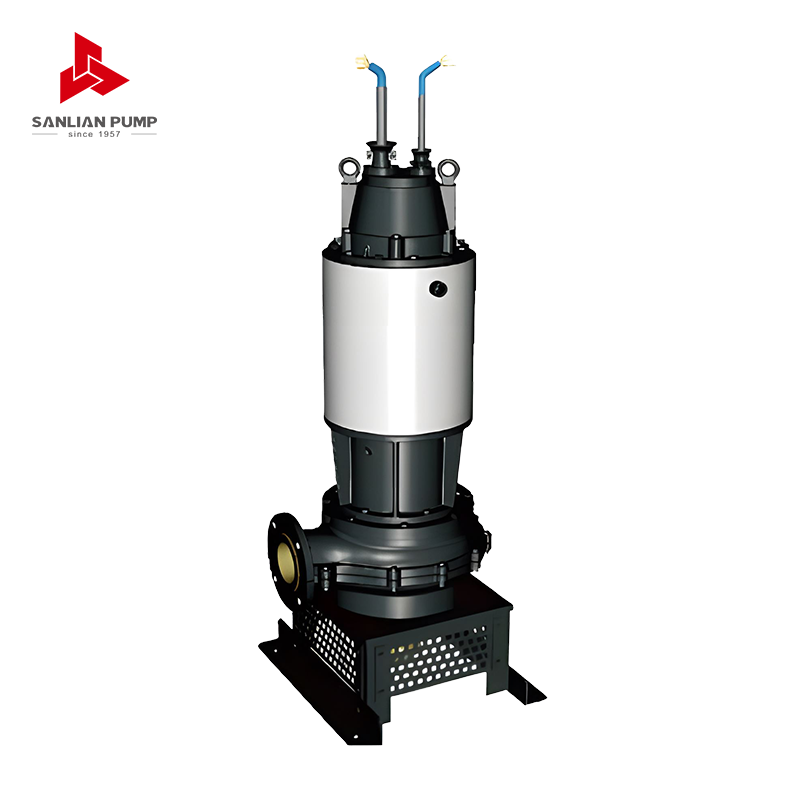
At Sanlian Pump, we build seal chambers and select face materials around the specific abrasive and chemical loads our customers describe to us, rather than defaulting to a single generic seal configuration for every application. Combining the right hardware choice with disciplined installation and monitoring is what turns a submersible pump into a genuinely long-service asset instead of a recurring maintenance line item.
Reading the Warning Signs Before Failure Happens
Because the seal sits hidden inside the pump, operators rarely see it fail directly. Instead, failure shows up as secondary symptoms that are easy to dismiss individually but form a clear pattern together.
- Milky or cloudy motor oil, indicating water has already entered the housing
- Gradual drop in insulation resistance readings over consecutive test cycles
- Unusual vibration or noise that develops after the pump has been in service for some time
- Nuisance tripping of ground fault or moisture sensors built into the motor
Treating any one of these signs as a maintenance trigger, rather than waiting for a full electrical trip, is usually the difference between replacing a seal kit for a modest cost and rewinding or replacing an entire motor.




 English
 中文简体
中文简体 Français
 Español
 Português
 عربى
عربى

 皖公网安备34052302341647号