Picture a municipal water pumping station at 2:00 AM. The city's demand has dropped to a fraction of its daytime peak, yet the fixed-speed pumps continue running at full capacity. An operator stands by a manual valve, throttling the discharge to prevent over-pressurization. The energy wasted in that single valve, across thousands of hours annually, represents a significant and avoidable operating cost. This is the problem a pump variable frequency drive (VFD) solves directly.
This guide explains what a pump variable frequency drive is, why it reduces energy consumption, and — just as importantly — when it does not make economic sense. You will also find a practical framework for selecting a VFD across different pump types, from end-suction centrifugal pumps to multistage and slurry pumps. The goal is not to sell you on a brand, but to help you make a technically sound decision for your pumping system.
What Is a Pump Variable Frequency Drive?
A pump variable frequency drive is an electronic device that controls the rotational speed of an alternating current (AC) motor by varying the frequency and voltage of the electrical power supplied to it. Instead of running a pump at a constant speed and then wasting excess flow through a control valve, a VFD allows the pump to match its output precisely to the system's real-time demand.
Internally, a VFD operates through a three-stage process: rectification, DC bus, and inversion. The rectifier converts incoming AC power to direct current (DC). The DC bus smooths this current and stores energy. The inverter then uses pulse-width modulation (PWM) to synthesize an AC output at the desired frequency and voltage. PWM rapidly switches the DC voltage on and off to create a variable-frequency output that drives the motor at a controlled speed.
It is useful to clarify the terminology here. A variable speed drive (VSD) is the broader category; it includes any method of changing pump speed, such as mechanical couplings or hydraulic drives. The VFD is a specific type of VSD that achieves speed variation electrically. In modern industrial pumping, the VFD has become the dominant method because of its precision, efficiency, and integration capabilities.
A crucial point: a VFD does not make a pump run "randomly faster or slower." It enables the pump to operate at a speed that meets the exact pressure and flow requirements of the system at any moment. This distinction matters for engineers who need to justify the investment to management.
How a VFD Changes Pump Performance: The Affinity Laws Explained
The economic case for a pump variable frequency drive rests on a well-established engineering principle: the pump affinity laws. These laws describe how pump performance changes with rotational speed. For a given pump impeller diameter, the relationships are as follows:
- Flow rate (Q) is directly proportional to speed (N).
- Head (H) is proportional to the square of speed (N²).
- Shaft power (P) is proportional to the cube of speed (N³).
The third relationship is the key. Because power varies with the cube of speed, a modest reduction in speed produces a disproportionately large reduction in power consumption. Consider a theoretical example: if a pump runs at 80% of its rated speed, the shaft power drops to 0.8³, or approximately 51% of full-load power. This is a simplified calculation that ignores motor and drive efficiencies, but it illustrates why VFDs are so effective in variable-demand systems.
Contrast this with throttle-valve control. When you throttle a discharge valve, you create artificial resistance. The pump continues running at constant speed, but the operating point shifts left on its performance curve. The energy difference between the pump's actual power draw and the useful hydraulic work performed appears as heat and pressure drop across the valve. This is wasted energy, and it occurs at every moment of throttled operation.
Industry experience shows that the most significant energy savings occur in friction-dominated systems — typically long-distance pipelines, water distribution networks, and closed-loop heating and cooling systems. In these systems, static head (the vertical lift) is relatively low compared to friction losses. When speed decreases, the pump's head curve drops in a way that naturally follows the system curve, maintaining efficiency. For a deeper look at efficiency measures across pumping installations, refer to the most effective ways to enhance pump energy efficiency.
Key Benefits of Adding a VFD to Your Pumping System
Beyond energy savings, a pump variable frequency drive delivers several operational and mechanical benefits that improve total system reliability.
Energy Consumption Reduction
This is the primary motive for most retrofits. A VFD matches pump output to demand, eliminating the excess flow and throttling losses that plague constant-speed systems. In systems with significant flow variation — such as municipal water supply or industrial process water — the payback period can be short.
Soft Start and Electrical Protection
Direct-on-line starting of an induction motor draws a starting current that can be several times the full-load current. A VFD ramps the motor speed up gradually, avoiding the sudden electrical surge. This reduces stress on the motor windings, the distribution transformer, and the entire electrical network. In facilities with sensitive equipment or weak grid connections, this is a meaningful advantage.
Reduced Mechanical Stress and Extended Pump Life
When a pump starts against a closed or partially closed valve, it experiences mechanical shock from the sudden torque and pressure rise. Similarly, rapid stops can cause pressure surges. A VFD's controlled acceleration and deceleration reduce wear on bearings, mechanical seals, and impellers. Over thousands of start-stop cycles, this directly translates to fewer seal replacements and longer bearing life.
Pressure Transient Control
Water hammer — the pressure spike caused by rapid flow changes — is a common cause of pipe and fitting failure. By ramping the pump speed smoothly, a VFD limits the rate of flow change in the pipeline, keeping pressure transients within acceptable limits. This is particularly valuable in long pipelines where the reflected pressure wave can be destructive.
Improved Process Control Accuracy
When a VFD is paired with a pressure, level, or flow transmitter, it creates a closed-loop control system. The drive adjusts speed continuously to maintain the desired setpoint accurately. This level of control is difficult to achieve with throttling valves, especially when demand fluctuates rapidly.
System Simplification
In some installations, a VFD can eliminate the need for control valves, bypass lines, and the associated piping. This reduces initial capital cost and simplifies maintenance, partly offsetting the VFD's own cost.
When Does a Pump VFD Make Sense? A Decision Framework
Despite the benefits, a VFD is not universally the right answer. The decision depends primarily on two factors: the system load profile and the shape of the system curve.
Scenarios Where a VFD Is a Strong Investment
- Substantial load variation: If your system's required flow varies widely over a day or a season — as in municipal water supply or industrial process cooling — a VFD avoids the waste of running at full speed continuously.
- Multiple pumps in parallel: In systems with several pumps that cycle on and off to match demand, a VFD on one pump can smooth the transition and maintain pressure without short-cycling the motors.
- Soft-start requirements: If your electrical network cannot tolerate large starting currents, or if you want to avoid mechanical shock during startup, a VFD provides a controlled ramp.
- Phase conversion needs: In some remote or retrofitted installations, a VFD can be used to convert single-phase input to three-phase output for a small motor, though this is an unusual application.
- Retrofit alternative to pump replacement: If a system's demand has changed significantly since the original pump was installed, a VFD can be a lower-cost alternative to replacing the pump itself.
A real-world reference point: the central river pumping station project case study demonstrates how a municipal pumping station manages variable inflows and outflows — a classic environment for VFD deployment.
Scenarios Where a VFD Is Not Worth the Cost
- Constant flow, full-load operation: If a pump runs at or near full capacity 24/7, there is little or no energy to save. The VFD adds its own inefficiency (typically 2–5% losses) and its capital cost cannot be recovered.
- Static-head-dominated systems: In systems where most of the head is vertical lift (static head) rather than friction, reducing speed does not reduce the pump's operating head requirement proportionally. The affinity laws still apply, but the pump may not move down its curve efficiently. Energy savings are often minimal in such cases.
- Very small pumps: For pumps under a few horsepower, the VFD cost can be a large fraction of the total system cost. Unless the application has unusual requirements, the payback is often unattractive.
The engineering community uses a quick screening criterion: if the system is friction-dominated and the flow varies by more than 20–30% over time, a VFD is worth serious consideration. If the system is static-head-dominated or the flow is constant, look elsewhere for efficiency gains.
Pump Types and VFD Compatibility: What to Consider
Not all pumps respond to variable speed operation in the same way. The pump's construction, its operating range, and the fluid it handles all affect how a VFD should be configured. Here is a pump-type-by-pump-type breakdown.
End-Suction Centrifugal Pumps
End-suction pumps are the workhorses of industrial water supply, HVAC, and general transfer duties. They are broadly compatible with VFD operation. The main limitation is the minimum speed: running a centrifugal pump too far below its rated speed (typically below 50–70%) causes a significant drop in efficiency and can result in the pump operating too close to its shut-off head, causing unstable flow.
For general industrial applications, the SPE series horizontal centrifugal pump is a common representative of this category. When paired with a VFD, ensure the motor is inverter-duty rated to handle the additional thermal stress at low speeds.
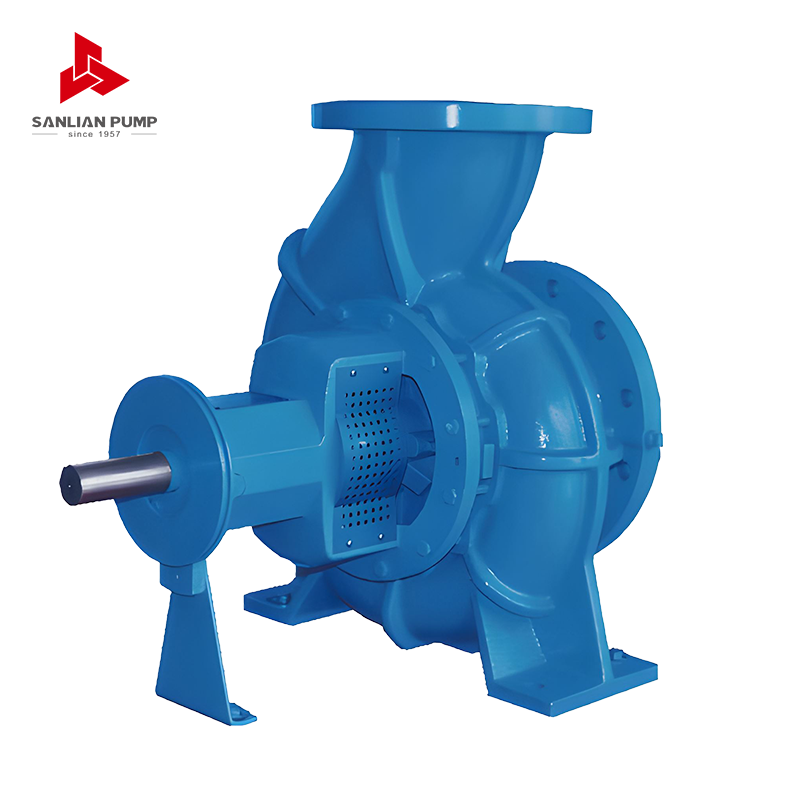 Custom SPE series horizontal single-stage end-suction centrifugal pump SuppliersSanlian Pump is China SPE series horizontal single-stage end-suction centrifugal pump Suppliers and Custom SPE series horizontal single-s...View Product →
Split-Case Pumps
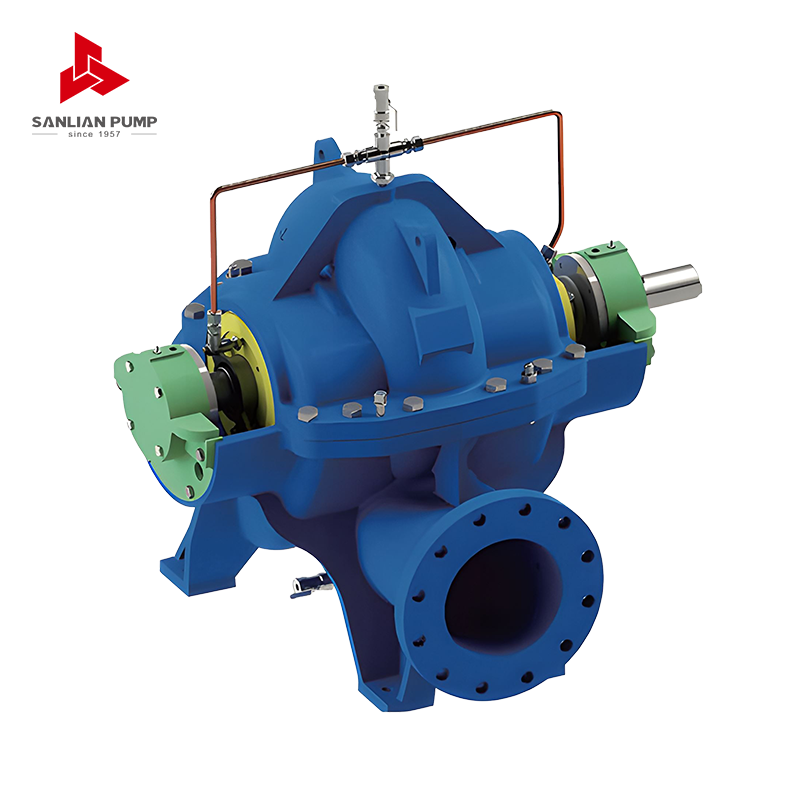
Split-case pumps are widely used in large-scale water supply, irrigation, and fire protection systems. They are friction-dominated applications, making them ideal candidates for VFD retrofits. The large flow rates involved mean that even a modest 10–15% speed reduction yields substantial absolute energy savings.
The HS/V series split volute centrifugal pump is a typical design used in such systems. The efficiency and reliability advantages of split-case pumps make them a natural fit for VFD control, since the pump's inherent high efficiency compounds the drive's energy savings.
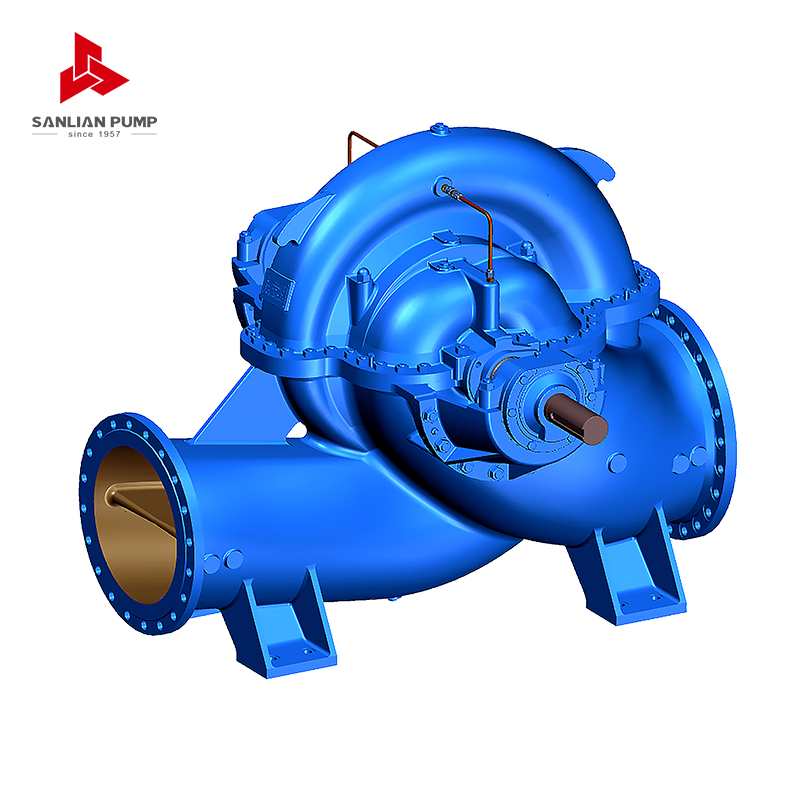 Custom HS (V) single-stage double-suction central volute centrifugal pump SuppliSanlian Pump is China HS (V) single-stage double-suction central volute centrifugal pump Suppliers and Custom HS (V) single-stage double-...View Product →
Multistage Pumps
Multistage pumps generate high head through a series of impellers. They are common in boiler feed, mine dewatering, and high-rise water supply. VFD compatibility is generally good, but there is a specific caveat: at very low speeds, the flow between stages may drop below the minimum recommended rate, causing inter-stage recirculation and potential overheating. As a rule, keep the speed above the manufacturer's recommended minimum, which is usually around 50–60% of rated speed.
The MD/S series multistage centrifugal pump offers a concrete example of a design built for high-pressure duties. When applying a VFD to this pump type, coordinate closely with the pump manufacturer to confirm the allowable speed range and avoid the inter-stage recirculation risk.
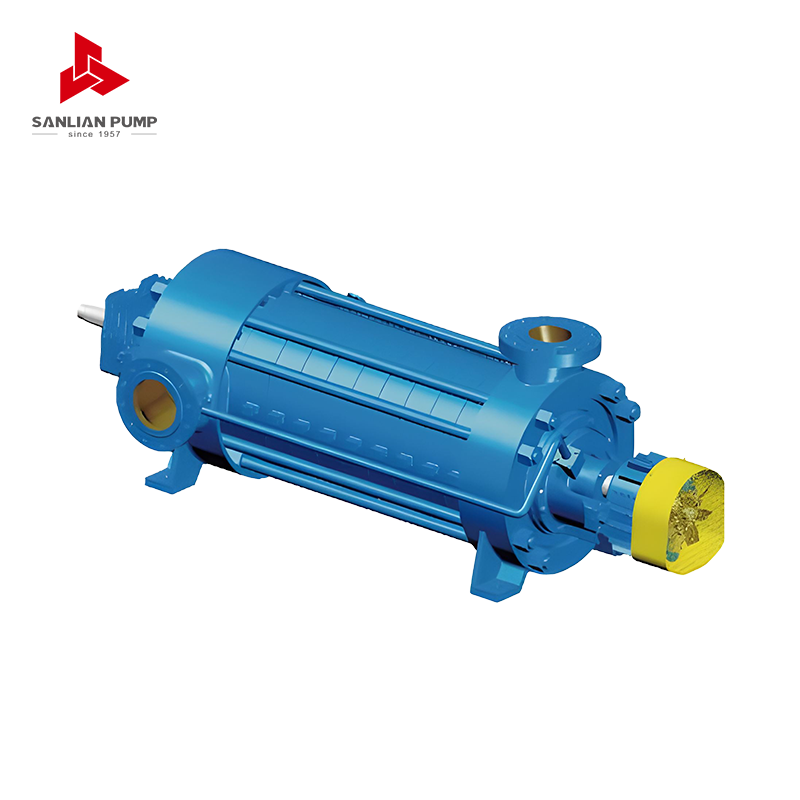 Custom MD(S) Series multi-stage centrifugal pump for coal mines Suppliers, CompaSanlian Pump is China MD(S) Series multi-stage centrifugal pump for coal mines Suppliers and Custom MD(S) Series multi-stage centrifugal ...View Product →
Mixed-Flow Pumps
Mixed-flow pumps, which combine centrifugal and axial flow characteristics, are common in irrigation, flood control, and large drainage stations. They handle large flow rates at moderate heads. For a technical overview of this design, refer to the working principle and applications of mixed-flow pumps. Their fairly flat head-vs-flow curve means that even small speed changes can produce significant flow changes, so VFD control tuning must be precise.
Submersible Pumps
Submersible pumps have a unique constraint: motor cooling. At high speeds, the pump's own flow provides cooling to the motor's outer jacket. If you run a submersible pump at low speed for extended periods, the cooling flow decreases and the motor may overheat. Always check the pump manufacturer's minimum speed specification for continuous operation.
Slurry and Mud Pumps
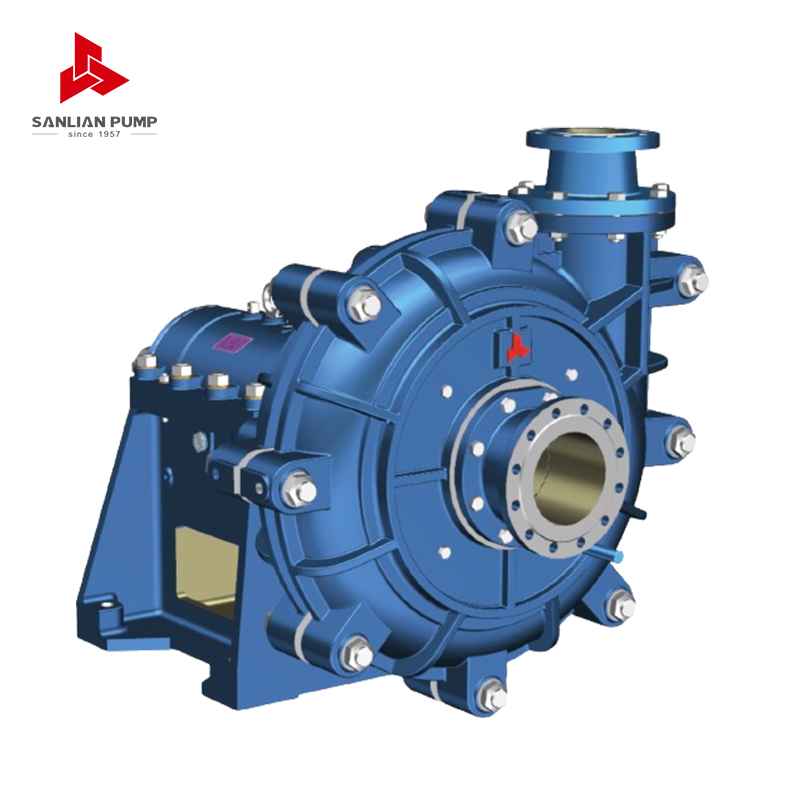
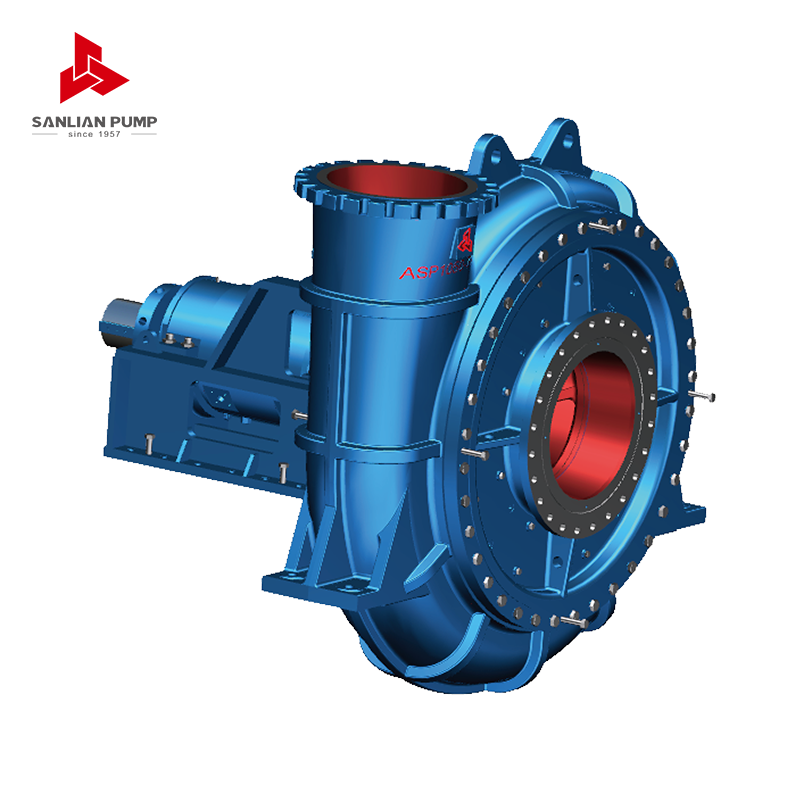
Slurry pumps handle abrasive and often settling solids. The critical issue with VFD operation is the minimum velocity required to keep solids in suspension in the pipeline. If a slurry pump is slowed down too much, the solids can settle in the pipe, blocking the line or causing excessive wear. Determine the critical settling velocity of the slurry before setting the minimum speed limit.
VFD Selection Checklist for Pump Applications
Choosing a variable frequency drive for your pump involves more than matching the motor kilowatt rating. The following checklist covers the key parameters your technical team should verify before purchasing.
Power and Voltage Rating
The VFD's rated power must be equal to or greater than the motor's rated power. The voltage class must match the site supply (e.g., 230V, 460V, 575V in North America). Oversizing the VFD is acceptable but adds cost; undersizing it risks nuisance trips and reduced lifespan.
Overload Capability
Centrifugal pumps typically demand a "light overload" or "normal overload" duty (e.g., 110% overload for 60 seconds). Constant-torque loads, such as positive displacement pumps, require heavier overload ratings. Confirm the starting torques of your application before choosing a drive class.
Control Mode
- V/f (Volts per Hertz) control: The simplest method, suitable for most centrifugal pumps where precise speed regulation is not critical.
- Sensorless vector control: Offers better speed regulation and torque response without an encoder, useful for multi-pump systems.
- Closed-loop vector control: Uses an encoder on the motor for high-precision speed and torque control, rarely needed for pump applications unless the process demands it.
Enclosure Protection (IP Rating)
Match the VFD's enclosure to the environment. In dusty or humid areas, choose an IP54 or IP55 rated enclosure. In corrosive chemical plants, the drive may need a stainless steel enclosure or a separate climate-controlled electrical room.
Communication and Integration
Modern pumping systems often connect to a PLC or SCADA network. Verify that the VFD supports standard industrial protocols such as Modbus RTU, Modbus TCP, Profibus, or EtherNet/IP. This capability is essential if you plan to control the pump remotely or log operational data.
Harmonic Mitigation
Large VFDs generate harmonic currents that can affect other equipment on the same distribution network. Depending on the drive's size and the network's sensitivity, you may need to install AC line reactors, DC chokes, or active harmonic filters. For drives above 100 kW, a harmonic study is often warranted.
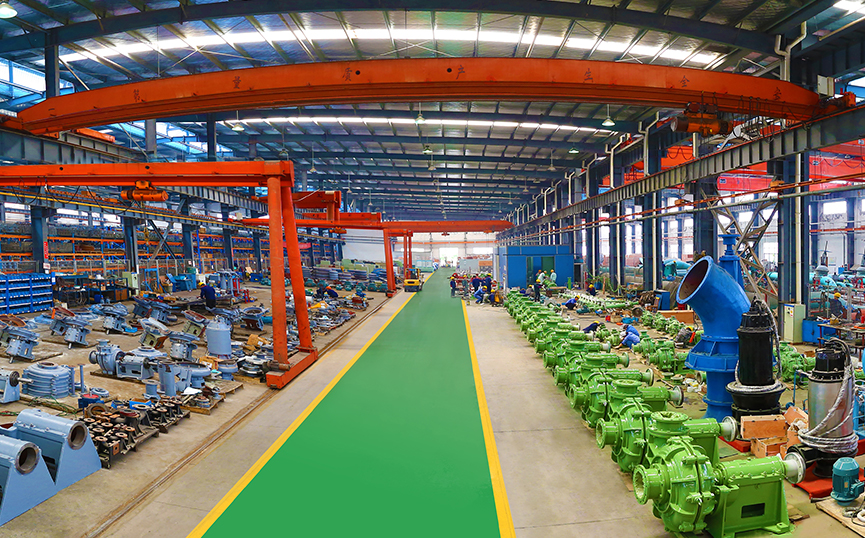
The final selection should always be coordinated with both the pump manufacturer and the motor manufacturer. A VFD is only one component in a chain; the control parameters, the motor insulation, and the pump's mechanical design must be compatible. As a pump manufacturer, Sanlian Pump Industry provides guidance on matching its pumps with appropriate drives, ensuring the pump–motor–drive system operates as a single, reliable unit.
Conclusion
A pump variable frequency drive is one of the most effective tools a plant or a municipality can deploy to cut operating costs and improve pump system reliability. Its benefits — energy savings, soft starts, reduced mechanical wear, and precise process control — are real and measurable. But the decision to install one must be grounded in a careful analysis of your system's load variation and its hydraulic characteristics.
Ask three questions before proceeding: Is my system friction-dominated? Does my flow vary significantly? Will the annual energy savings justify the capital cost over the expected payback period? If the answer to all three is yes, a VFD is a sound investment. If not, you may be better served by other efficiency measures.
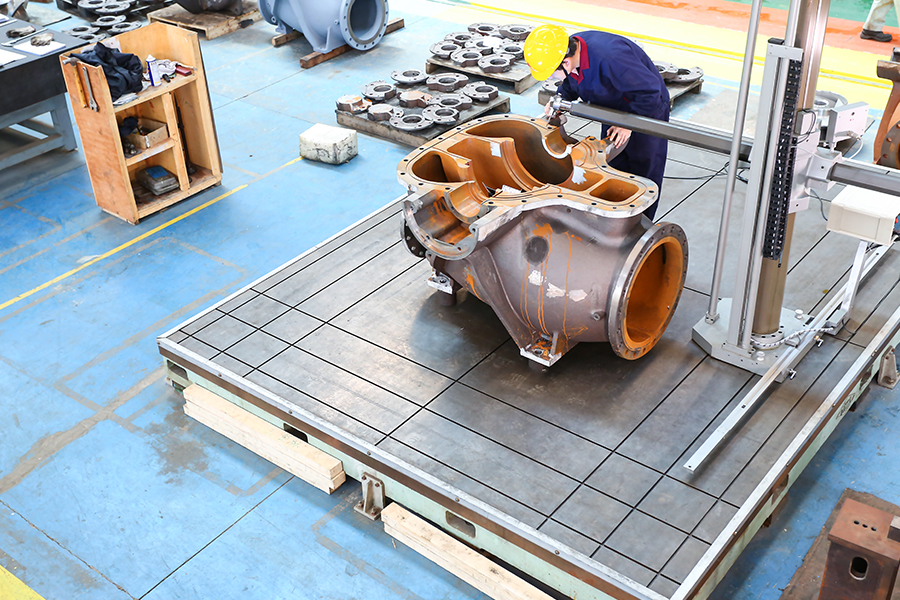
When you are ready to evaluate a VFD for a new project or a retrofit, talk to your pump supplier along with your electrical contractor. A pump manufacturer that understands both the hydraulic and the electrical side of the system — like Sanlian Pump Industry, with its in-house foundry and pump design capabilities — can help you select the right pump–drive combination rather than leaving you to reconcile mismatched data sheets.



 English
 中文简体
中文简体 Français
 Español
 Português
 عربى
عربى

 皖公网安备34052302341647号